
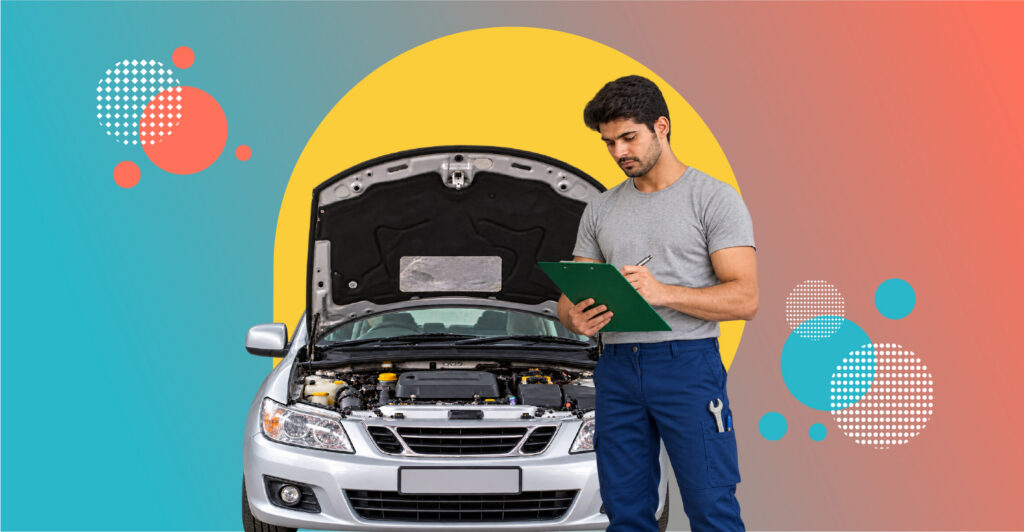
A festive drive home often means a fully loaded car, long highway stretches and roads busier than usual. A short car care checklist, done about a week before you leave, catches most of the problems that cause breakdowns: worn or under-inflated tyres, low fluids, weak batteries and faulty lights.
This guide covers when to book a service, what to check yourself, which documents to carry, and quick checks to repeat on the way.
Should you get a car service before a long drive?
If your next scheduled service is due soon or already overdue, book it before the trip rather than after. Your owner’s manual or last service record will show when it’s due, by date or by kilometres.
Workshops tend to be busy in the weeks before major festivals, so booking early gives the mechanic time to source any parts. When you book, ask them to look at the items in the checklist below. This works as a simple car service checklist to take with you, and you can tell them you’re planning a long highway drive with a full load.
If your car was serviced recently, the self-checks below are usually enough. Leave at least a few days between the checks and the trip, so there’s time to fix anything you find.
The car care checklist: what to check
Most of these take a few minutes and need no tools. Do them with the engine cold and the car parked on level ground.
Tyres, including the spare
Tyres are the single most important road trip car check, because they’re all that connects the car to the road.
- Pressure. Check all four tyres and the spare when cold, using the pressure printed on the sticker inside the driver’s door frame or in the manual. Some manuals list a higher pressure for a fully loaded car, which is worth using for a festive trip with family and luggage.
- Tread. Look for the small tread wear indicator bars in the grooves. If the tread is level with them, the tyre needs replacing.
- Damage. Check sidewalls for cuts, bulges or cracks, and look for nails or stones lodged in the tread.
- Spare and tools. Make sure the spare is inflated and that the jack, wheel spanner and locking-nut key (if your car has one) are in the boot.
Engine oil, coolant and other fluids
- Engine oil. Pull out the dipstick, wipe it, reinsert it and check the level sits between the two marks. Top up with the grade in your manual if it’s low. Very dark, gritty oil is a sign a change is due.
- Coolant. Check the level in the coolant reservoir against the min and max marks. Never open the radiator or reservoir cap when the engine is hot.
- Brake fluid. The reservoir is usually see-through with level marks. A level that keeps dropping needs a mechanic, not just a top-up.
- Windscreen washer fluid. Fill it up. Highway dust and insects build up quickly on long drives.
Lights and visibility
Ask someone to stand outside the car while you test every light: low and high beam, indicators on both sides, brake lights, reverse lights, hazard lights and fog lamps if fitted. Replace any blown bulb before the trip.
This matters more in the festive season, when evenings get dark earlier and many parts of north India see morning fog as winter sets in. Clean headlamp covers and a clear windscreen make a noticeable difference after dark.
Brakes
On a quiet road, notice whether the car pulls to one side when braking, whether the pedal feels soft or spongy, and whether you hear squealing or grinding. Any of these is a reason to have the brakes inspected before a long drive.
Battery
Check that the battery terminals are tight and free of white or greenish corrosion. If the engine has been slow to start or the battery is several years old, ask a workshop to test it. A weak battery often fails on the first cold morning or after the car has been parked for a few days.
Wipers, horn and AC
Replace wiper blades that streak or judder. Check the horn works, and run the AC for a few minutes: weak cooling or a musty smell can mean it needs servicing before hours on a hot highway.
How do you get your car ready for a long drive?
Share your views in surveys with The Panel Station.
Documents and essentials to carry
A traffic check or a minor accident is far easier to handle with the right papers to hand.
- Documents. Driving licence, registration certificate (RC), valid insurance and pollution under control (PUC) certificate. Digital copies in DigiLocker or mParivahan are generally accepted.
- FASTag. Check the balance and that it’s active and linked to the right vehicle, since toll plazas on national highways collect tolls through FASTag.
- Emergency kit. First aid kit, torch, reflective warning triangle, tow rope, jump leads, a basic tool kit and a tyre inflator if you have one.
- For the journey. Drinking water, snacks, phone chargers and some cash for places where digital payment isn’t possible.
- Emergency numbers. Save 112 (national emergency number) and the NHAI highway helpline 1033 in your phone.
Clean and pack the car
A clean car is a safer one on a long drive, not just a nicer one.
- Glass and mirrors. Clean the windscreen inside and out, plus all windows and mirrors. A film on the inside of the glass causes glare at night.
- Clear the cabin. Remove loose items that could roll under the pedals or fly forward in a hard stop.
- Pack heavy items low. Put heavy bags at the bottom of the boot and behind the rear seats, and avoid stacking luggage above the seat backs where it blocks the rear view.
- Don’t overload. The maximum load is listed in the manual. Too much weight affects braking and tyre wear.
- Child seats. Fit them before you set off, and check they’re secured according to the seat’s instructions.
Quick checks on the road
A long drive puts steady strain on the car, so a minute at each stop helps.
- Walk around the car and look at all four tyres.
- Watch the dashboard for any new warning lights, especially temperature, oil pressure and battery.
- If the temperature gauge climbs, pull over safely, switch off and wait for the engine to cool before checking coolant.
- Take regular breaks. Tiredness is a risk on long festive drives, especially at night.
Checklist at a glance
| When | What to check |
| A week before | Book a service if due; test battery if it’s old or slow to start |
| A few days before | Tyres and spare, oil, coolant, brake and washer fluids, all lights, wipers, horn, AC |
| The day before | Documents, FASTag, emergency kit, clean glass, pack heavy items low |
| At every stop | Walk-round tyre check, dashboard warning lights, a break for the driver |
A few minutes on these checks means more of the festive break is spent with family rather than at a roadside.
Planning more festive travel this season?
Log in to see which surveys are open for you now.
Frequently Asked Questions
Q1: How many days before a road trip should I check my car?
About a week before is ideal. That leaves time to book a service, replace a tyre or battery, or source a part if the checks turn up a problem. Repeat the quick tyre and light checks the day before you leave.
Q2: What tyre pressure should I use for a long drive?
Use the pressure your car’s manufacturer recommends, printed on the sticker inside the driver’s door frame or in the owner’s manual. Many manuals give a separate, higher figure for a fully loaded car. Always check pressure when the tyres are cold.
Q3: Is a full car service necessary before every long drive?
No. If your car is up to date on its scheduled service, the self-checks in this guide are usually enough. Book a service if one is due soon, if you’ve noticed any warning signs such as brake noise or slow starting, or if the car hasn’t been driven much recently.
Q4: How can I tell if my car battery might fail on the trip?
Common warning signs are slow cranking when you start the engine, dim headlights at idle, corrosion on the terminals, or a battery that is several years old. A workshop can test it in a few minutes.
Q5: What should I do if the engine overheats on the highway?
Pull over somewhere safe, switch off the engine and turn on the hazard lights. Wait until the engine has fully cooled before opening the bonnet or checking coolant, because a hot cooling system is under pressure. If it happens again, call for roadside help rather than continuing.
Q6: How do I take care of my car during a long festive trip?
Avoid overloading it, take breaks every few hours, walk round the car at each stop to look at the tyres, and watch for new dashboard warning lights. Check fuel and plan refuelling in advance on less busy routes.