

Coffee is one of the most widely consumed beverages in the world, with more than 2 billion cups enjoyed every day. At the same time, fitness culture has exploded globally, with gyms, home workouts, and wellness apps becoming part of everyday life. Coffee often gets caught in a tug of war between praise and criticism when it comes to fitness. Some swear by a pre-workout cup of coffee to boost energy, while others argue it leads to dehydration, jitters, or even dependency. So, the big question stands—when it comes to coffee and fitness, are they friends or foes?
The Role of Coffee in Fitness
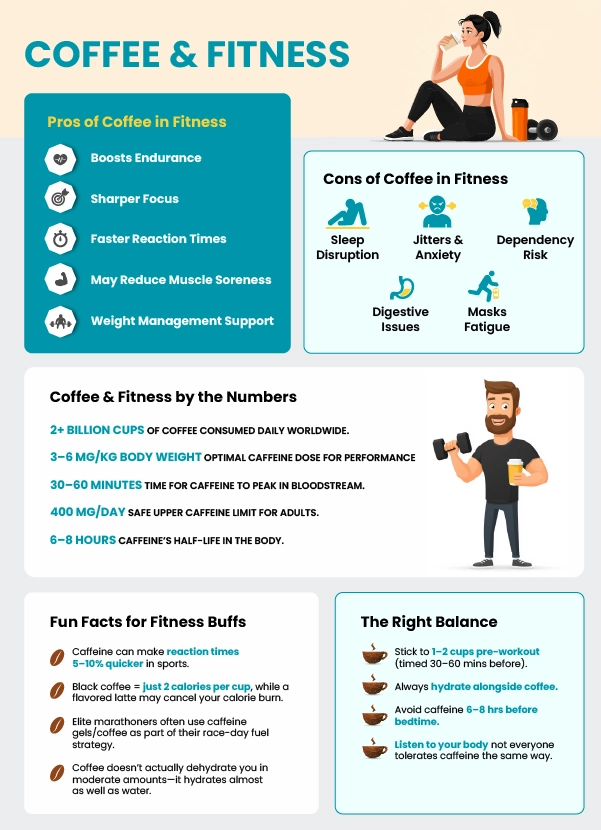
Caffeine, the primary active compound in coffee, is a natural stimulant. According to the European Food Safety Authority, a moderate caffeine intake of 3–6 mg per kilogram of body weight can significantly improve physical performance. That’s why many pre-workout supplements often contain caffeine. It is the same boost you get from a simple espresso shot.
- Improved endurance – Studies show that caffeine increases fat oxidation, meaning your body uses fat for fuel, which can help endurance athletes perform longer.
- Boost in focus – Coffee sharpens alertness and concentration, crucial for pushing through tough workouts.
- Faster reaction times – Useful for sports that require quick decision-making, like football or basketball.

Coffee as a Pre-Workout
Drinking coffee before exercise can enhance performance, but timing matters. Research suggests that caffeine peaks in the bloodstream about 30–60 minutes after consumption, so your pre-gym coffee should ideally be timed within that window.
- Best before cardio or strength training – A small to moderate cup can give the right energy boost.
- Avoid overdoing it – Too much caffeine (above 400 mg daily, roughly 4 cups) can cause jitters, anxiety, and irregular sleep patterns.
When Coffee Doesn’t Play Nice with Fitness
Coffee and fitness can go hand in hand with clear benefits but not without some drawbacks.
- Dehydration – For years, coffee was accused of being a diuretic. However, recent studies show moderate coffee consumption does not significantly dehydrate you. Still, pairing coffee with enough water is a smart move.
- Sleep disruption – Caffeine stays in your system for up to 6–8 hours. Drinking coffee late in the day can reduce recovery sleep that is vital for muscle repair and growth.
- Individual sensitivity – Not everyone processes caffeine the same way. Some may feel energized, while others experience digestive discomfort or anxiety.
Coffee and Muscle Recovery
While coffee helps you perform better during exercise, its role in recovery is a little trickier. Research suggests caffeine can reduce muscle soreness after workouts. However, excessive consumption can interfere with deep sleep, which is just as critical for recovery. Balance, once again, is the keyword.
Coffee vs. Pre-Workout Supplements
Many gym-goers spend heavily on pre-workout powders that promise explosive energy. Interestingly, most of these products list caffeine as their primary active ingredient. Coffee, in its natural form, can provide the same kick without the artificial additives.


Coffee, Fitness, and Weight Management
Caffeine can slightly increase your metabolic rate, meaning you burn calories a bit faster. This effect is modest but real. When it comes to coffee and fitness, combining moderate coffee intake with regular exercise may help in weight management, though it’s not a magic bullet.
?? Be mindful of sugary coffee drinks. A large, flavored latte can pack more calories than the workout you just finished. Stick to black coffee or minimal add-ins if weight loss is your goal.
When Coffee Becomes a Foe in Fitness
- Over-reliance – If you can’t work out without coffee, it may signal dependency.
- Masking fatigue – Coffee may hide tiredness, making you push harder when your body actually needs rest.
- Digestive issues – Coffee can stimulate the gut, which isn’t always welcome during a long run or intense gym session.
Finding the Sweet Spot: Coffee and Fitness Done Right
To make coffee and fitness work in harmony:
- Stick to moderate amounts
- Hydrate well and pair every cup of coffee with a glass of water.
- Don’t skip meals. Coffee should complement, not replace, your pre-workout nutrition.
- Avoid caffeine 6–8 hours before bedtime.
- Know your limits and adjust intake based on how your body responds.
So, Is Coffee a Friend or Foe?
So, when it comes to coffee and fitness, the verdict is clear – coffee is more of a friend than a foe, as long as you enjoy it wisely. Moderate intake can boost performance, sharpen focus, and even aid recovery. But overconsumption or poor timing can make it work against your fitness goals.
At the end of the day, it’s about balance. Treat coffee like a supportive workout buddy: helpful, motivating, but not something you should rely on for every single move. Combine it with good sleep, hydration, and nutrition, and you’ve got a winning recipe for fitness success.