


Many people trying to lose weight or build muscle wrestle with the idea of a cheat meal. Eating clean all week, hitting the gym, and sticking to your fitness plan the whole week but giving it all up for a pizza on a weekend is a common struggle that leaves many feeling conflicted and guilty. Are cheat meals a reward that keep you sane, or a trap that derails your progress?
The truth is that the relationship between cheat meals and fitness progress isn’t black and white. Science, psychology, and real-life experience all show that cheat meals can both help and hurt, depending on how you approach them. This blog will break it down so you can finally stop feeling guilty about that slice of cheesecake.
What Are Cheat Meals Really
A cheat meal is typically defined as an intentional break from your regular diet. Instead of counting calories, carbs, or macros, you enjoy something indulgent without worrying about restrictions.
Some people do a cheat meal once a week, while others go all-in with a full cheat day. The key difference is moderation: one burger and fries is a cheat meal, while breakfast donuts, lunch pizza, and dinner cake all day long is a cheat day.
Do Cheat Meals Ruin Progress
Short answer: No, not if managed properly.
A single cheat meal won’t undo a week of discipline. To gain even half a kilogram of fat, you’d need to eat about 3,500 calories above your daily maintenance level. That’s more than most people can pack into one sitting.
However, cheat meals can stall progress if they turn into cheat weekends—or if you start using them as an excuse for overindulging more often than you train.



Here’s How Cheat Meals Actually Help
- Psychological relief – Following a strict diet in the long-term is hard. Cheat meals can reduce the feeling of deprivation and prevent binge eating later.
- Sustainability – Allowing yourself occasional indulgence makes it easier to stick with healthy eating the rest of the time.
- Social flexibility – You don’t have to miss every birthday party or dinner outing with friends.
A study found that people who incorporated planned indulgences into their diets were more likely to stick to their health goals than those who followed rigid, all-or-nothing plans.
Signs You Need a Cheat Meal
- You’re constantly thinking about “forbidden” foods.
- Workouts feel flat and energy levels are low.
- You’ve been sticking to your diet strictly for weeks without flexibility.
- You’re becoming irritable.
A well-planned cheat meal can act like a reset button for both your body and mind.
Will Your Cheat Days Boost Metabolism
Cheat meals can cause a temporary spike in metabolism because of the increased calories and carbs. Some research shows that a large meal can raise leptin levels by up to 30% for 24 hours.
But this boost is modest. You won’t magically burn off that cheesecake just because your metabolism worked a little harder. So while cheat meals can help with energy, they’re not a free pass to overeat endlessly.
If you keep it to a single cheat meal once a week, the impact on weight loss is minimal. Many people actually find they lose more weight long-term because they stick to their diets better when allowed flexibility.
A full cheat day, however, can undo an entire week of progress if it turns into 5,000–6,000 extra calories. Moderation is the key difference.


Recover from a Cheat Day
Recovery depends on the size of the indulgence. After one cheat meal, your body typically stabilizes within 24–48 hours. After a full cheat day, it might take 3–4 days of clean eating and exercise to feel back to normal.
Drinking plenty of water, eating high-fiber foods, and getting good sleep can speed up recovery.
For most people, 2–4 cheat meals a month work well without affecting progress. If you’re on a strict fat-loss phase, keep them less frequent. If you’re maintaining weight, you can enjoy them a little more often.
Finding the Balance
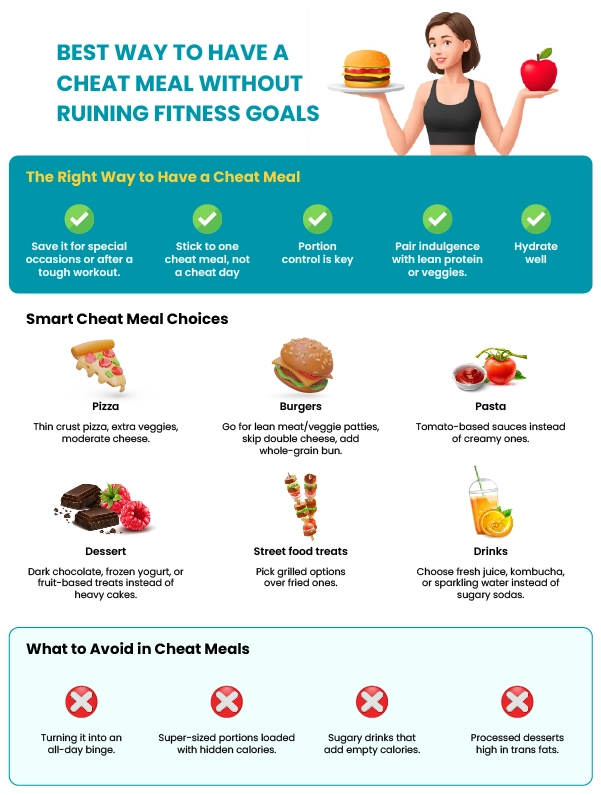
- Plan ahead – Save your cheat meal for special occasions, not random cravings.
- Keep portions moderate – A burger and fries is fine, three burgers and a milkshake is overkill.
- Don’t feel guilty – Food isn’t “good” or “bad.” It’s about overall balance.
- Return to routine quickly – One indulgence doesn’t mean you’ve failed—just get back on track the next day.
At the end of the day, cheat meals are not the enemy. In fact, when used wisely, they can be powerful allies in keeping your fitness journey sustainable, enjoyable, and effective.