
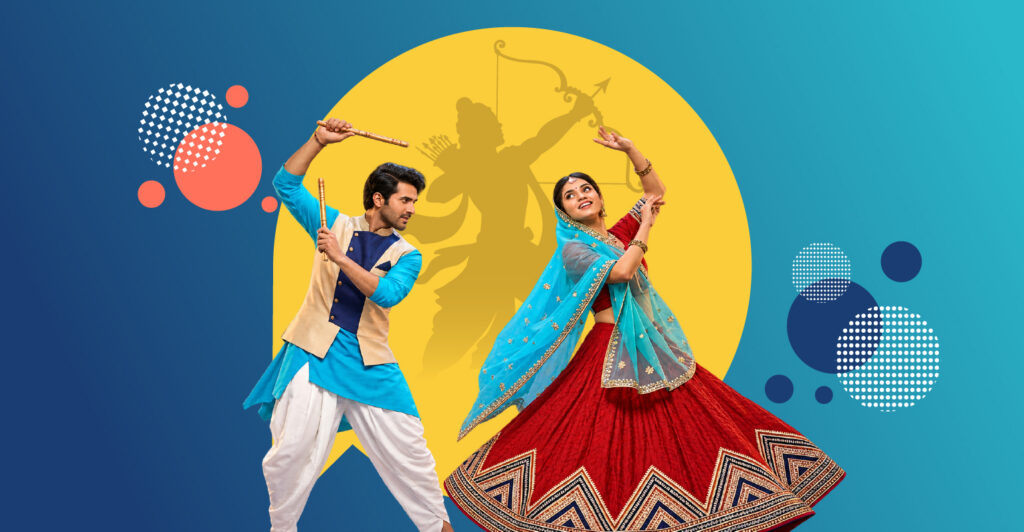
Dussehra 2026 falls on Tuesday, 20 October. It marks the end of Navratri and celebrates the victory of good over evil, whether that means Lord Ram defeating Ravan or Goddess Durga defeating Mahishasura. Across India, the day is marked with Ramlila performances, the burning of Ravan effigies, Durga idol immersions, prayers and family meals.
This guide explains why the festival is celebrated, how different parts of India mark it, and practical ways to enjoy it with your family, from small rituals at home to staying safe in festival crowds.
When is Dussehra 2026?
Dussehra, also called Vijayadashami, is celebrated on the tenth day (Dashami) of the bright fortnight of the Hindu month of Ashwin. Vijayadashami 2026 falls on Tuesday, 20 October.
Because the date follows the lunar calendar, it changes every year and can fall anywhere from late September to October. If you plan to perform a puja or attend a Ravan Dahan, check the timings with your local temple or organising committee, as these can vary by city.
Why do we celebrate Dussehra?
The festival carries two main stories, and which one a family emphasises often depends on the region.
Lord Ram’s victory over Ravan. In the Ramayana, Lord Ram defeats the demon king Ravan, who had abducted Sita. The name Dussehra is often explained as coming from dasha (ten) and hara (removal), a reference to Ravan’s ten heads. This is why effigies of Ravan are burnt at sunset in many towns and cities.
Goddess Durga’s victory over Mahishasura. In eastern India especially, the day marks the end of Durga’s battle with the buffalo demon Mahishasura. Vijayadashami literally means “the tenth day of victory”.
Both stories carry the same message: courage and truth can overcome arrogance and wrongdoing. Many families also treat Vijayadashami as an auspicious day for new beginnings, such as starting a course, buying something important or beginning a new venture.
How Dussehra is celebrated across India
The festival looks quite different from one region to the next. These are some of the best-known Dussehra celebrations in India.
North India: Ramlila and Ravan Dahan
In the days leading up to Dussehra, local groups stage Ramlila, a dramatic retelling of the Ramayana performed over several evenings. On Dussehra itself, large effigies of Ravan, often alongside his brother Kumbhkaran and son Meghnad, are set alight at sunset, usually packed with firecrackers. In cities like Delhi and Varanasi, these events draw large crowds.
West Bengal and eastern India: Bijoya Dashami
Here, the day is the final day of Durga Puja. Married women take part in sindoor khela, smearing vermilion on the goddess and on one another, before the idols are carried for immersion. Families then visit relatives to exchange Bijoya greetings and sweets.
Karnataka: Mysuru Dasara
Mysuru celebrates Dasara as a state festival through Navratri. The Mysuru Palace is lit up each evening, and on Vijayadashami the Jamboo Savari procession carries the idol of Goddess Chamundeshwari through the city on a decorated elephant.
Himachal Pradesh: Kullu Dussehra
Kullu’s celebration begins on Vijayadashami, when most others end, and continues for about a week. Deities from surrounding villages are carried in procession to join the chariot of Lord Raghunath in Kullu’s Dhalpur Maidan.
Chhattisgarh and Rajasthan: Bastar and Kota
Bastar Dussehra in Chhattisgarh runs for many weeks and centres on the local goddess Danteshwari rather than on Ravan. In Rajasthan, Kota hosts a large Dussehra fair with cultural performances and stalls.
Maharashtra and South India: new beginnings
In Maharashtra, people exchange apta or shami leaves as symbolic “gold” and wish one another prosperity. In parts of South India, Ayudha Puja honours the tools, vehicles and books people use in daily life, and in Kerala, young children begin learning letters in a ceremony called Vidyarambham on Vijayadashami.
Dussehra celebration ideas for the family
You don’t need a large event to make the day meaningful. These ideas work for most homes, whether you’re celebrating with a big joint family or a household of two.
- Watch a local Ramlila together. If your area has one, attending an evening performance before Dussehra helps younger family members follow the story when the effigies burn.
- Cook one festive dish as a family. Pick a dish your family associates with the festival and ask the person who makes it best to teach everyone else. Writing the recipe down keeps it from being lost.
- Honour everyday tools. Inspired by Ayudha Puja, clean and decorate the things your family relies on, such as bicycles, laptops, school bags or kitchen tools, and talk about the work they help with.
- Start something new. Use the day to begin a book, a class or a hobby, in the spirit of Vijayadashami as a day for new beginnings.
- Exchange leaves or sweets with neighbours. Sharing apta leaves or homemade sweets is a simple way to include people living away from their families.
- Decorate the entrance. A toran of marigolds and mango leaves or a rangoli at the door sets the festive mood without much expense.
- Bring in relatives who are far away. Agree on a time for a video call so they can join a meal or the evening puja.
How does your family celebrate Dussehra?
Tell us which traditions you keep, and which ones are changing, in The Panel Station’s celebrations survey.
Keeping traditions alive with children
Children remember festivals through what they do, not what they are told. A few small habits help the meaning of Dussehra last beyond the fireworks.
- Tell the story in short parts. Over the Navratri evenings, share one episode of the Ramayana or the Durga story at a time, and ask what they think the characters should have done.
- Let them perform it. A short play at home, with siblings or cousins as Ram, Sita, Hanuman and Ravan, often sticks better than any explanation.
- Turn “burning Ravan” into a reflection. Ask each person to write down one habit they want to leave behind, then tear up the slips together. It carries the festival’s message without the fire risk.
- Ask elders how they celebrated. Recording a grandparent describing Dussehra in their childhood keeps a family’s version of the festival alive.
Why do traditions still matter?
Read how celebrations and the customs behind them continue to shape family life in 2026
Celebrating safely and sustainably
Ravan Dahan events are crowded and loud, and a little planning makes them easier with children or elderly relatives.
- Keep a safe distance from the effigies. They usually contain firecrackers, and debris can fall well beyond the front rows.
- Agree on a meeting point. Choose a landmark in case anyone gets separated, and make sure young children know a parent’s phone number.
- Protect young ears. Small children and pets can find the noise distressing; standing further back or watching from a distance helps.
- Follow local rules. Some cities restrict firecrackers during the festive season, so check your local advisory before buying any.
- Choose eco-friendly idols and decorations. Clay idols, natural colours and fresh flowers are easier on rivers and lakes than plaster and plastic, and many municipalities set up artificial ponds for immersion.
Dussehra wishes to share
Short, personal messages often mean more than forwarded images. A few you can adapt:
- “May this Vijayadashami bring courage to your heart and light to your home. Happy Dussehra!”
- “Wishing you and your family a Dussehra full of new beginnings and old traditions.”
- “May every Ravan in our lives, whether doubt, anger or fear, burn away this Dussehra.”
- “Shubh Vijayadashami! May truth and kindness guide you all year.”
- “Sending you sweets, good wishes and a little extra gold this Dussehra.
Make this Dussehra your family’s own
Whichever story your family tells and however you mark the day, the heart of Dussehra is choosing what to keep and what to leave behind. Pick one tradition to pass on this year, one new idea to try, and one safety plan if you’re heading to a Ravan Dahan.
Frequently Asked Questions
Q1: Are Dussehra and Vijayadashami the same festival?
Yes. Both names refer to the same day, the tenth day after the start of Navratri. “Dussehra” is more common in north and west India and is closely tied to Lord Ram’s victory over Ravan, while “Vijayadashami”, meaning the tenth day of victory, is used widely across India and also marks Goddess Durga’s victory.
Q2: Is Dussehra a public holiday in India?
Yes, Dussehra is usually a gazetted holiday for central government offices, and most states also declare a holiday. Check your state’s holiday list or your employer’s calendar, as dates for related holidays such as Durga Puja vary by state.
Q3: Can we celebrate Dussehra without firecrackers or a Ravan Dahan?
Yes. Many families mark the day with a puja, a festive meal, visits to relatives and exchanging sweets or apta leaves. A symbolic activity, such as writing down a habit to leave behind and tearing it up, keeps the meaning without noise or smoke.
Q4: Why are apta leaves exchanged on Dussehra?
In Maharashtra and parts of Karnataka, apta leaves are exchanged as symbolic gold, a wish for prosperity. The custom is linked to a legend in which gold coins fell from the sky onto an apta or shami tree.
Q5: Is Vijayadashami a good day to start something new?
Many families consider it auspicious for new beginnings. Common examples include children starting to learn letters, people beginning a course or business, and families buying a vehicle or other important purchase.
Q6: How long after Dussehra is Diwali?
Diwali usually falls about three weeks after Dussehra. In 2026, Diwali is expected on Sunday, 8 November.
Q7: What food is eaten on Dussehra?
It depends on the region and the family. Festive sweets are common almost everywhere, and many households prepare a special meal after the puja. In Gujarat, eating fafda and jalebi on Dussehra is a popular custom.