
For years, health culture often focused on transformation: stricter diets, ambitious fitness goals, dramatic resolutions, or completely new routines. That thinking is becoming more practical. People still want to feel healthier, happier, and more balanced, but they are increasingly looking for habits that can fit into ordinary life. Feeling healthier does not always begin with a major lifestyle change.
Sometimes it starts with going to bed slightly earlier. Taking a walk after work. Drinking enough water during the day. Eating a proper meal instead of skipping one. Calling someone when stress builds. Putting the phone away for a while.
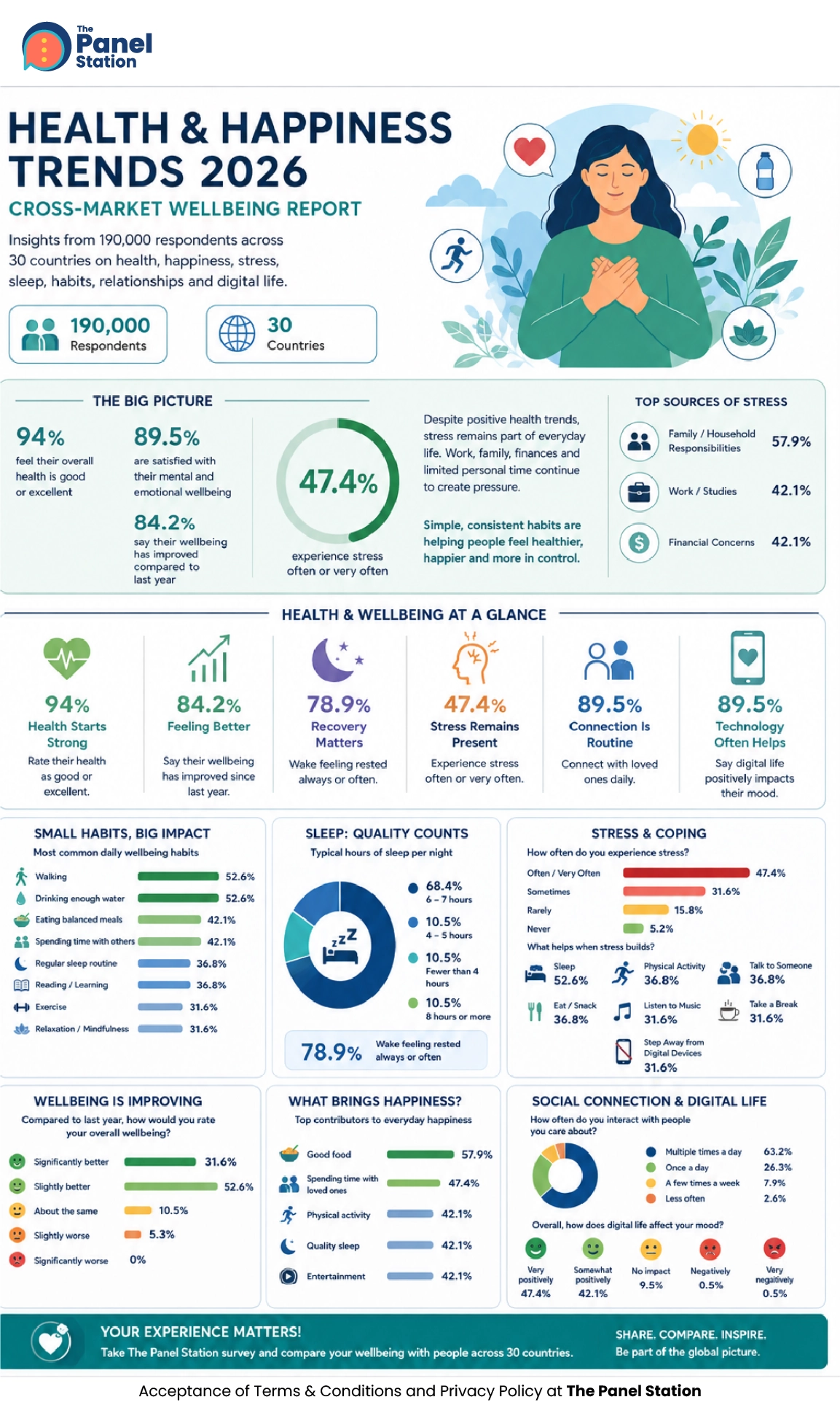
With a striking 94% rating their overall health as good, wellbeing appears to be increasingly supported by these small, everyday choices rather than dramatic changes.
These choices may seem small, but together they are changing how people think about wellbeing.
Panel Station’s Health & Happiness Trends 2026: Cross-Market Wellbeing Report brings together the experiences of 190,000 respondents across 30 countries. The findings show generally positive perceptions of health and wellbeing, but they also reveal something important: feeling well does not mean living without stress, tiredness, pressure, or difficult days.
The trends story presents the data behind these shifts. This blog looks more closely at what they mean for everyday life.
Why Is Wellbeing Becoming More Practical?
Wellbeing has become a large and sometimes complicated category. People are constantly told what to eat, how much to exercise, when to sleep and how to manage stress. But everyday life rarely follows an ideal routine.
53% consider walking as a small step for big impacts on health and well being.
Jobs, families, budgets and unexpected demands can make carefully planned habits difficult to maintain. That may be why simpler practices matter so much.
The bigger shift may be from perfection to consistency. A short walk repeated regularly can be more sustainable than an ambitious fitness plan that lasts only a few weeks. A realistic bedtime routine may be more useful than chasing an ideal schedule that does not fit everyday responsibilities.
Can People Feel Healthy and Still Feel Stressed?
One of the more interesting findings is that positive wellbeing and stress can exist at the same time. Around 48% feel stressed even when helthy.
People can exercise, eat well and maintain strong relationships while still facing pressure from work, finances, family responsibilities or lack of time. Feeling healthy does not remove everyday demands.
The more useful question, then, is not whether stress exists, but how people recover from it. Respondents use a range of coping strategies, including sleep, exercise, talking to someone, listening to music, taking a break and stepping away from digital devices.
There is no single formula for recovery. A resilient wellbeing routine may be less about eliminating stress altogether and more about recognising it early, understanding what helps and having several ways to reset.
What helps you reset when everyday pressure builds?
Share your experience in The Panel Station survey and compare your wellbeing habits with others.
Why Is Sleep About More Than the Number of Hours?
Sleep advice often begins with a number, but people’s actual experience of sleep is more complicated. Duration matters, but it is only one part of the picture. Consistency, interruptions, stress, bedtime habits, comfort and what happens before sleep can all influence whether someone wakes feeling restored.
80% wake up feeling rested which indiactes people may increasingly pay attention to whether they wake refreshed, how steady their energy feels during the day and whether their sleep routine is realistic enough to maintain over time.
Two people can sleep for the same number of hours and feel completely different the next morning. That is why the conversation around sleep is moving beyond simply counting hours. This makes sleep feel less like a target to achieve and more like a pattern to understand. The goal is not only to spend enough time in bed, but to create conditions that support better rest consistently.
Big health goals can feel motivating at first. The challenge is maintaining them when work becomes busy, routines change or family responsibilities increase.
Small habits have a different advantage: they are easier to fit into everyday life. Drinking enough water, taking a walk, preparing a balanced meal or stepping away for a short break rarely requires a complete lifestyle reset.
Individually, these actions may seem minor, but wellbeing is often built through accumulation. Repeating manageable habits can also create a sense of control, especially when larger pressures cannot be changed immediately.
Someone may not be able to reduce a demanding workload overnight, but they can take a walk at lunchtime. Financial worries may not disappear quickly, but protecting sleep or talking to someone they trust can still support wellbeing.
How Are Food and Social Connection Becoming Part of Wellbeing?
Health is often discussed as though it is mainly about exercise and nutrition. In reality, wellbeing is much broader.
Food, relationships, movement, sleep and entertainment can all shape how people feel. Meals, for example, are not only about nutrition. They can also provide comfort, routine, culture, family time and connection.
90% maintain everyday contact with loved ones which can offer reassurance, belonging and emotional support in ways that health routines alone cannot.
This is why wellbeing is difficult to separate into neat categories. Physical health can affect mood, stress can influence sleep, poor sleep can shape food choices, and strong relationships can make difficult periods easier to manage.
Rather than treating wellbeing as a collection of separate goals, people may increasingly see it as a connected system in which different parts of life continuously influence one another.
Is Digital Life Always Bad for Wellbeing?
Digital wellbeing conversations often focus on reducing screen time. Constant notifications, comparison, information overload and difficulty switching off can certainly add pressure.
But digital life is not negative by default.
89.5% say its effect on their mood is positive, suggesting that technology can also support connection, entertainment, learning and relaxation.
The more useful distinction may be between passive and purposeful use. Spending an hour scrolling without thinking can feel very different from calling a friend, listening to music, following an exercise class or watching something that genuinely helps someone unwind.
Digital wellbeing may therefore be less about using technology less and more about using it with greater intention. The goal is not to remove screens from everyday life, but to make sure they are serving a purpose rather than simply filling every available moment.
What Does Progress Look Like When It Is Not Dramatic?
Wellbeing improvement is often presented as a dramatic transformation, but real progress can be much quieter.
Small, consistent habits can make stress easier to manage. To give an example, around 1 in 3 step away from digital devices to reset and recharge.
Progress might mean sleeping a little better, exercising more regularly, drinking more water, managing stress sooner or making more time for family. Individually, these changes can feel small, but over time they can make everyday life feel noticeably different.
This is also why comparing wellbeing with other people can be misleading. Improvement depends on where someone started, what they are managing and what their life realistically allows. A better measure of progress may simply be whether life feels a little healthier, easier or more manageable than it did before.
How Much Does Choice Influence How Healthy Life Feels?
Wellbeing is easier to maintain when people feel they have some control over how they spend their time, manage routines and respond to pressure. Even small choices can create a sense of agency.
Choices matter because the study says that around 52.6% feel slightly better than last year. That might mean choices made in the past can define our present well being.
Deciding when to take a break, choosing food that feels nourishing, making time for movement or protecting time with people who matter may seem minor, but they can make daily life feel more manageable.
When people feel they have no room to choose, healthy habits can start to feel like obligations. Wellbeing may therefore depend not only on what people do, but on whether those actions feel self-directed and realistic.
Sometimes, feeling healthier begins with simply feeling that there is still something you can decide for yourself.
Are We Measuring Wellbeing by the Wrong Things?
Wellbeing is often measured through visible behaviours: how often someone exercises, what they eat, how much they sleep or whether they follow a healthy routine. Those things matter, but they do not always show how someone is actually feeling.
A person may be doing many of the “right” things and still feel exhausted, overwhelmed or disconnected. Someone else may have an imperfect routine but feel supported, rested and able to manage everyday pressures.
This suggests wellbeing may need to be judged more broadly. Energy, emotional balance, relationships, recovery and the ability to handle difficult days can be just as meaningful as meeting ideal health targets.
The better question may not be, “Am I doing everything right?” but “Does my everyday life feel healthy, manageable and sustainable?”
What Will Wellbeing Look Like in the Future?
The future of well-being may be less about adding more and more about protecting the basics: sleep, movement, food, connection and rest.
Technology will continue to shape health choices through tracking tools, personalised recommendations and digital support. But access to more information does not automatically lead to healthier lives. The real challenge is turning advice into habits people can realistically maintain.
The strongest wellbeing routines are likely to be flexible enough to survive busy weeks, stress and changing circumstances. They will not require people to practise wellness perfectly, but help them recover, reset and continue.
What one everyday change would help you feel healthier or happier?
Take The Panel Station survey and share your priorities with people across 30 countries.
Frequently Asked Questions
1. What does wellbeing mean in 2026?
Wellbeing increasingly includes physical health, emotional balance, sleep, stress management, social connection, food, movement, and the ability to maintain healthy routines in everyday life.
2. Why are small habits important for wellbeing?
Small habits are often easier to repeat. Walking, staying hydrated, eating balanced meals, sleeping consistently, and taking breaks can support wellbeing without requiring a major lifestyle change.
3. Can someone feel healthy and still experience stress?
Yes. Positive health and stress can exist together. Work, finances, family responsibilities, and lack of personal time can create pressure even when someone otherwise feels physically and emotionally well.
4. Why is sleep quality important?
Sleep duration is only one part of rest. Consistency, interruptions, stress, environment, and bedtime habits can all affect whether someone wakes feeling refreshed.
5. How does social connection affect wellbeing?
Regular interaction with people we trust can provide emotional support, reassurance, belonging, and opportunities to talk through difficult experiences.
6. What role does food play in happiness?
Food supports more than physical health. Meals can also provide comfort, enjoyment, routine, cultural connection, and opportunities to spend time with other people.
7. Is digital technology always harmful to wellbeing?
No. Digital life can support connection, entertainment, learning, health management, and relaxation. Its effect often depends on how intentionally technology is used.
8. What are common ways people cope with stress?
People use a mix of strategies including sleep, exercise, talking to someone, music, taking breaks, eating, and spending time away from digital devices.
9. What does realistic wellbeing progress look like?
Progress may involve small improvements such as sleeping better, moving more regularly, eating more consistently, managing stress earlier, or making more time for relationships.
10. What is likely to shape the future of wellbeing?
The future of wellbeing is likely to focus on practical, sustainable routines supported by technology, greater awareness of mental health, stronger social connection, and habits that can adapt to changing everyday demands.