
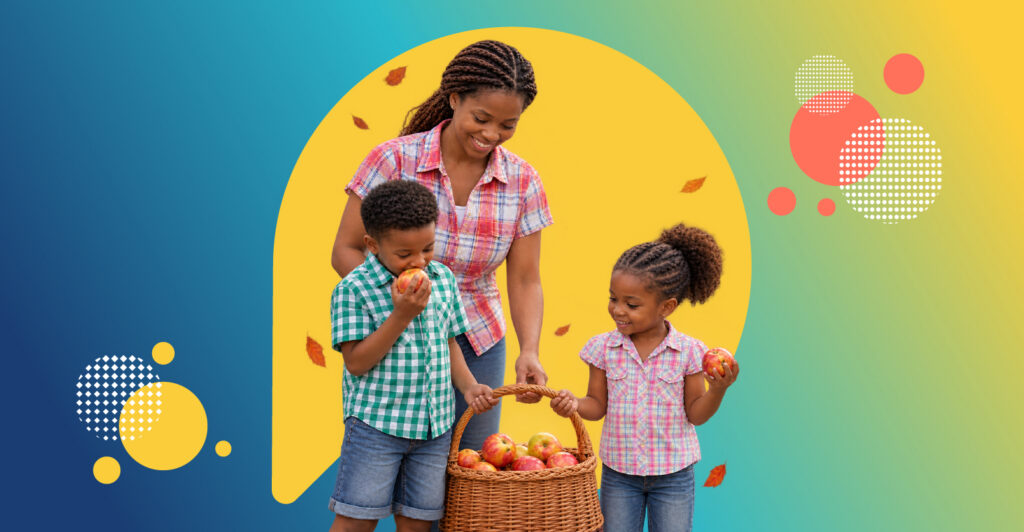
The best fall activities for families are the simple ones: a pumpkin patch on a Saturday morning, a walk to collect leaves, apple crisp in the oven, and an early-dark evening under a blanket. None of them needs much planning, and many cost nothing.
Below are 15 easy ideas grouped by where they happen (outdoors, at home and in the evening), with a quick comparison table, tips for different ages and a plan for fall break.
Why fall is a good time for family plans
Fall gives families a few things the rest of the year doesn’t. Cooler weather makes outdoor time comfortable for small children, harvest season brings farms and community events within reach, and earlier sunsets turn evenings into natural time at home together. School routines have usually settled by October, so it is easier to fit a weekend plan around them.
Outdoor ideas
1. Pick pumpkins at a local farm
A pumpkin patch is the classic fall outing for a reason: children get to choose something and carry it home. Check the farm’s website or call ahead, because opening days, admission and per-pumpkin prices vary. Weekday afternoons and early weekend mornings are usually quieter. Many patches close soon after Halloween, so go before the end of October if you can.
Wear boots or old shoes, bring a wagon if the farm allows it, and give each child a size limit (“one you can carry”) before you arrive.
2. Go apple picking
pple orchards turn picking into a lesson in where food comes from. Seasons vary by region and apple variety, so check which varieties are ready before you go. Bring a bag for your own snacks, wash fruit before eating, and plan what you will bake with the haul (see idea 9).
Farm-stand cider is often unpasteurized. Health authorities advise that young children, pregnant people and older adults drink only pasteurized juice and cider.
3. Walk a corn maze or take a hayride
Many farms offer a smaller children’s maze alongside a larger one, which is a better choice for toddlers and preschoolers. Agree on a meeting point before you go in, and keep younger children’s hands in yours. On hayrides, stay seated and follow the farm’s rules.
4. Go on a leaf scavenger hunt
This free idea works in any park, trail or neighborhood street. Give children a list to look for: a red leaf, a yellow leaf, a leaf bigger than their hand, an acorn, a pinecone and a seed pod. Younger children can use a picture list instead of words.
After walks through tall grass or woods, check everyone for ticks, including hair, behind the ears and under clothing.
5. Rake a leaf pile and jump in
Raking turns a chore into the best part of the afternoon. Clear the pile of sticks and stones first, keep it away from the street and the driveway, and bag the leaves once everyone has had their turn.
6. Visit a local fall festival
Towns, schools, churches, libraries and parks and recreation departments often run fall festivals with games, crafts and food. Check your city or county events calendar, bring some cash for small vendors, and decide on a leaving time before you arrive, especially with toddlers.
At-home ideas
7. Decorate or carve pumpkins
For young children, paint, stickers and washable markers are easier and safer than carving. If you carve, an adult handles the knife while children draw the face and scoop out the seeds. Use a battery-operated light or a glow stick inside instead of a candle.
Roast the seeds afterward with a little oil and salt for a snack.
8. Make leaf art
Use the leaves from your scavenger hunt. Place a leaf under paper and rub over it with the side of a crayon, press leaves between book pages for a week, or string them into a garland for the window.
9. Bake something seasonal together
Apple crisp, pumpkin muffins and banana bread are forgiving recipes for young helpers. Children can wash fruit, measure, pour and stir, while an adult handles the oven and the knives. It is also a good use for apples from idea 2.
10. Make a pinecone bird feeder
Spread nut butter over a pinecone, roll it in birdseed and hang it from a branch you can see from a window. Use sunflower seed butter if anyone in your family or your child’s class has a nut allergy. Keeping a simple tally of visiting birds extends the activity for days.
Cozy nights in
11. Host a family movie night
Let children choose from a shortlist you have already approved, build a blanket nest on the floor and make popcorn together. Popcorn is a choking risk for young children, so offer toddlers a different snack.
12. Toast s'mores
If you have a fire pit, keep children at a set distance and an adult in charge of the flames. Check local burn rules first, because some areas restrict outdoor fires in dry conditions Without a fire pit, s’mores work in the oven or microwave.
13. Start a library reading night
A library card is free, and fall is a good time to start a weekly reading night. Let each child choose a few seasonal picture books or a longer story to read aloud over several nights. Many libraries also run free story times.
14. Stargaze after early sunset
Clocks go back on Sunday, November 1, 2026, which means darker evenings before bedtime. On a clear night, bundle up, head for the darkest spot nearby, and give everyone’s eyes 10 to 15 minutes to adjust. Look for the Moon and the brightest stars first.
15. Do something kind together
Rake a neighbor’s leaves, drop off cans at a food drive or make cards for someone who lives alone. Fall food drives are common ahead of Thanksgiving, and helping choose and pack the items gives children a concrete way to take part.
HOW DOES YOUR FAMILY SPEND FALL WEEKENDS?
Share how your household plans outings, time at home and time together this season with Panel Station.
All 15 ideas at a glance
| # | Idea | Cost | Where | Works for |
| 1 | Pumpkin patch | Varies by farm | Outdoors | All ages |
| 2 | Apple picking | Varies by orchard | Outdoors | Preschool and up |
| 3 | Corn maze or hayride | Varies by farm | Outdoors | All ages (children’s maze for little ones) |
| 4 | Leaf scavenger hunt | Free | Outdoors | All ages |
| 5 | Leaf pile | Free | Outdoors | All ages |
| 6 | Local fall festival | Often free entry; activities may cost | Outdoors | All ages |
| 7 | Pumpkin decorating or carving | Low cost | Home | All ages (carving by adults) |
| 8 | Leaf art | Free | Home | All ages |
| 9 | Seasonal baking | Low cost | Home | Preschool and up |
| 10 | Pinecone bird feeder | Low cost | Home | Preschool and up |
| 11 | Movie night | Low cost | Home | All ages |
| 12 | S’mores | Low cost | Home or yard | Preschool and up |
| 13 | Library reading night | Free | Home | All ages |
| 14 | Stargazing | Free | Outdoors | Preschool and up |
| 15 | Something kind together | Free | Varies | All ages |
Fall activities by age: toddlers to kindergarten
Toddlers
Keep outings short and plan them around naps. Toddlers enjoy sensory experiences: crunching leaves, touching a pumpkin’s ridges, dropping leaves from a height. Choose small pumpkins they can hold, and watch for choking hazards such as acorns, small gourds and craft pieces.
Preschoolers
Preschoolers like jobs. Give them a picture scavenger list, ask them to count the pumpkins in a row, or put them in charge of stirring the batter. Simple crafts such as leaf rubbings hold their attention well.
Kindergartners
Kindergartners can use a written list, read numbers on a recipe and help navigate a corn maze. Let them take on a small responsibility for the day, such as carrying the snack bag or choosing the route on a nature walk.
Making the most of fall break
Many school districts have a fall break, though the timing varies. A simple plan avoids a week of either overbooking or screens:
- One outing day: a farm, orchard or a drive to see fall color. Many states publish foliage reports showing where colors are at their peak.
- One home project day: baking, pumpkin decorating or bird feeders.
- One kindness day: raking for a neighbor or a food drive.
- Rest days in between, with library books and a movie night.
Book popular farms for a weekday if your break falls midweek; crowds are usually smaller than at weekends.
Pick three ideas for this week
You don’t need all 15. Choose one outdoor idea, one at-home project and one evening plan, put them on the calendar and keep the rest for later in the season. Most of the ideas cost little or nothing, and the ones children remember tend to be the ones they helped choose.
SEE HOW PANEL STATION WORKS
Panel Station is where people share opinions on everyday life, from family routines and home life to shopping and travel, and discover the trends behind them. Find out how taking part works.
FAQs
1. What can we do with the kids on a rainy fall day?
Answer: Move the at-home ideas to the top of the list. Baking, pumpkin painting, leaf art with leaves collected earlier and a library reading session all work indoors. A short walk in rain boots and waterproof jackets can also be fun if it isn’t cold, followed by something warm to drink.
2. How can we enjoy fall on a tight budget?
Lean on the free options: leaf hunts and leaf piles, library books and story times, stargazing, community festivals with free entry, and acts of kindness such as raking for a neighbor. For paid outings, a few pumpkins from a grocery store and a home decorating session give a similar experience to a farm visit at a lower cost.
3. When does fall start and end in the US?
Astronomical fall starts at the September equinox, around September 22 or 23, and ends at the December solstice, around December 21. Meteorologists count fall as September, October and November. Farm activities such as pumpkin patches and orchards usually follow local harvest seasons, which differ by region.
4. Is farm-stand apple cider safe for children?
Only if it has been pasteurized or otherwise treated to kill harmful bacteria. Unpasteurized juice and cider should carry a warning label, and health authorities advise young children, pregnant people and older adults to avoid it. If you’re not sure, ask the farm, or bring the cider to a boil and let it cool before serving.
5. At what age can children help carve pumpkins?
Children of any age can help, but the knife should stay with an adult for young children. Toddlers and preschoolers can draw the face and scoop out seeds with a spoon, while older children may use pumpkin-carving tools made for kids under close supervision.
6. How do we keep a farm or festival trip easy with a toddler?
Go early, keep the visit short and plan it around naps. Bring snacks, water, wipes and a change of clothes, and use a stroller or wagon that can handle grass and dirt. Decide on one or two things to do there rather than trying to see everything.