
If food choices are becoming more global, why does home still sit at the centre of the plate?
That contradiction says a great deal about eating in 2026. Consumers can discover a new cuisine in seconds, order dinner through an app, follow a high-protein plan, recreate a family recipe, or decide that the meal they want most is simply the one they grew up eating. Food culture is expanding, but it is not becoming uniform.
This blog builds on Panel Station’s Food Culture Trends 2026: Cross-Market Eating Report, based on 486,100 completed responses across 32 countries.
The research shows a striking mix of familiarity and exploration.
The deeper story is not that tradition is disappearing. It is that tradition is learning to coexist with convenience, curiosity, health goals, technology, and changing lifestyles.
Why Is Food Becoming More Personal Rather Than More Uniform?
Global access has made food discovery easier than ever. Restaurant chains cross borders, imported ingredients are widely available, social platforms expose people to dishes from unfamiliar cultures, and delivery apps place hundreds of options on one screen.
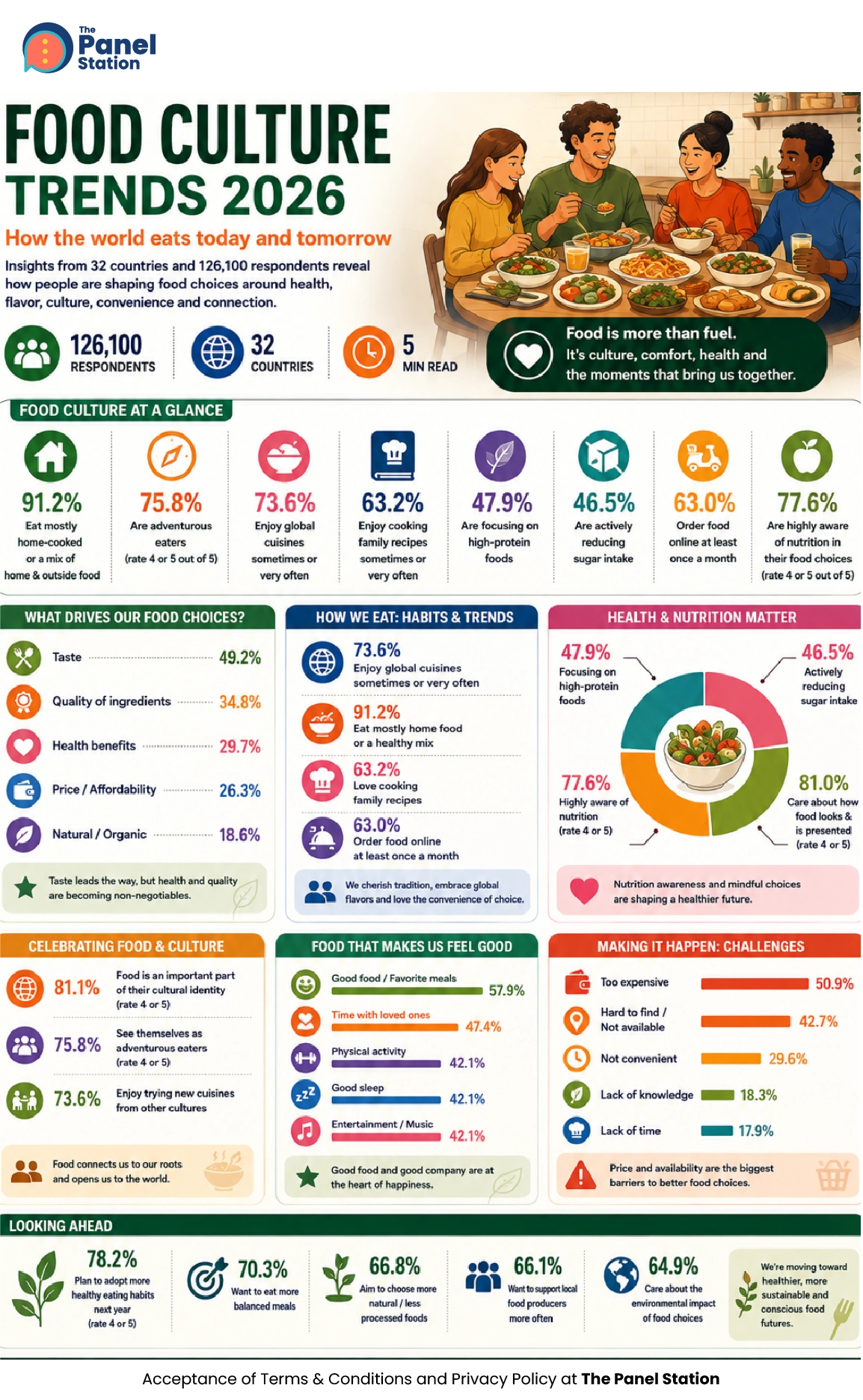
Yet access has not erased local preference. 81.1% see food as an important expression of cultural identity.
Food remains personal because it performs several roles at once. It feeds the body, but it can also signal identity, create comfort, preserve family memories, support health goals, and offer a simple way to experience another culture. Two people may order the same dish for completely different reasons: one because it is familiar and the other because it feels new.
The future of food culture is therefore likely to be layered rather than linear.
Why Does Home Cooking Still Matter When Convenience Is Everywhere?
Convenience is one of the defining features of modern eating, yet it has not replaced the kitchen.
9 out of 10 respondents belive home food offers something convenience services cannot fully replicate: control.
Cooking allows people to choose ingredients, manage portions, adjust flavour, respond to dietary needs, and prepare meals around household preferences. It can also make economic sense when several people are eating together.
But there is an emotional reason too. The kitchen becomes more than a place where food is prepared; it becomes one of the places where identity is reinforced.This does not make delivery the enemy of home cooking.
How Are Global Cuisines Expanding Local Food Culture?
Local food is still powerful. Local or regional cuisine is the most widely enjoyed option.
Strikingly, global curiosity is widening, with around three in four enjoying cuisines from different cultures.
Someone can value the food they grew up with and still want sushi on Friday, pasta on the weekend, shawarma for lunch, or a fusion dish discovered online. Global discovery is adding layers rather than simply replacing local habits.
This creates an interesting opportunity for food businesses. Consumers do not always need something completely unfamiliar. Often, they want enough novelty to feel exciting without losing the cues that make food approachable.
Organic and natural foods are becoming more visible in everyday food choices as consumers pay greater attention to ingredients, sourcing, and how food is produced.
For many people, however, choosing organic still depends on practical factors such as price, availability, freshness, and perceived quality.
That may help explain why organic food remains a relatively small part of everyday choices, with fewer than 1 in 5 respondents opting for it.
Organic options may appeal more when consumers can clearly understand the benefits and feel the additional cost is justified. This means organic eating is likely to grow through everyday, accessible choices rather than major changes in diet. Making natural and organic products easier to find, understand, and afford could help them become a more regular part of the food basket.
What Happens When Health Goals Meet the Desire for Taste?
Health is becoming part of everyday food decision-making rather than a separate category of eating. Instead of following one universal definition of a good diet, consumers are choosing the changes that fit their own goals. One person may prioritise protein, another may reduce sugar, and someone else may simply add more vegetarian meals without adopting a strict label.
That flexibility matters because food still has to work in real life. People travel, celebrate, eat socially, order delivery, and turn to comfort food. Habits are more likely to last when they can
For brands, the implication is simple: a nutritional promise may win attention, but taste and quality are what make the product worth returning to.
What Change Is Reaching Your Plate?
Take the survey and share the eating habit you expect to change next.
What Makes Someone Try a Food They Have Never Had Before?
The strongest trigger for experimentation is not advertising, it is curiosity.
75.8% are highly adventurous with food.
Consumers often want discovery to feel self-directed. A recommendation, an interesting story, or a convincing review can create a stronger reason to explore than a conventional promotional message.
For food brands, the challenge is therefore not simply to be louder. It is to be more discoverable.
Where does the product come from? What ingredient makes it different? Is there a regional story behind it? How do people usually eat it? Can it be sampled? Does it solve a familiar need in an unexpected way?
Curiosity grows when there is something specific to uncover.
Food also remains deeply social. People send restaurant recommendations, share photographs, discuss new dishes, and ask friends what is worth ordering. One positive experience can therefore become another consumer’s reason to try.
How Is Nutrition Changing the Way People Plan Their Meals?
Nutrition is becoming a more visible part of everyday meal planning with 4 in 5 giving emphasis on what they eat.
People are paying closer attention to what goes into their food, how balanced a meal feels, and whether it supports goals such as better energy, weight management, or overall wellbeing.
This does not mean every meal is planned around strict health rules. Taste, convenience, cost, and family preferences still matter. Instead, many consumers are trying to make small adjustments, such as adding more protein, reducing sugar, choosing fresher ingredients, or balancing indulgent foods with healthier options.
Meal planning is therefore becoming more considered. People are not only asking what they want to eat, but also what fits their lifestyle, budget, and health priorities.
Why Does Food Have to Look Good Before It Tastes Good?
Food is increasingly judged before the first bite. In a restaurant, presentation can shape expectations of freshness, care, portion size, and quality. On a delivery platform, an image may determine whether someone opens the menu item at all. In retail, packaging can signal convenience, health, indulgence, premium quality, or sustainability before the consumer reads the details.
Around 50% prioritise taste over visual appeal, suggesting that flavour still matters more than how food looks on the plate.
This matters even more in digital environments because consumers cannot smell, touch, or taste food at the point of discovery. Photography and packaging become substitutes for senses that are temporarily unavailable.
The risk is equally clear. If the real product consistently fails to match the expectation created by the image, presentation stops building appeal and starts damaging trust.
How Is Sugar Awareness Changing Everyday Food Choices?
Sugar is becoming a more considered part of everyday food choices, with around half paying closer attention to how much they consume and where it appears, especially in packaged foods, drinks, snacks and desserts.
For many consumers, the goal is not to remove sugar completely but to manage it more carefully. This can mean choosing lower-sugar options, checking labels, reducing sweetened drinks, or balancing occasional treats with healthier meals.
As awareness grows, brands may also face greater pressure to offer clearer information and products that make it easier for consumers to control sugar without giving up taste or convenience.
How Much Sugar Is Part of Your Everyday Diet?
Share how you manage sugar, read labels, and make healthier food choices.
Is Delivery Replacing Cooking, or Simply Reshaping the Routine?
Consumers may cook when they have time, order when work runs late, eat out for social occasions, and use delivery when convenience matters most. Different formats serve different moments.
That means delivery services and restaurants will increasingly compete on more than speed. Reliability, food quality, portion value, freshness, packaging, menu choice, and consistency will influence whether convenience becomes repeat behaviour.
The more routine delivery becomes, the less novelty alone will be enough. Consumers will expect a dependable experience.
What Does Comfort Food Tell Us About the Future?
The open responses are revealing. Foods people say they cannot imagine giving up include rice, chicken, pizza, biryani, bread, vegetables, fish, curry, chocolate, and home food.
The list differs across cultures, but the emotion behind it is familiar.
Comfort food can represent childhood, family, celebration, routine, place, or reassurance. That explains why even adventurous eaters continue to return to familiar meals.
Novelty and comfort are not opposites. They play different roles. Exploration creates excitement; familiarity creates security.
For food brands, innovation therefore does not always have to mean breaking with the past. A familiar product made healthier, more convenient, easier to prepare, or better suited to a new occasion may be more powerful than something completely unfamiliar.
What Will Food Culture Look Like Next?
Food culture in 2026 is not moving towards one global diet. It is moving towards more choice, personalisation, and combination.
Consumers will continue to cook at home while using delivery. They will preserve family recipes while exploring global cuisines. They will think more carefully about protein, sugar, oil, and ingredients while still expecting pleasure. They will discover food through friends, reviews, and digital platforms but make the final judgement through taste and quality. These themes also define the future direction identified in the underlying trends report.
The brands that understand this will avoid forcing consumers into false choices between health and enjoyment, tradition and innovation, convenience and quality, or local identity and global curiosity.
The future of food will belong to experiences that help people combine these needs in ways that fit real life.
Frequently Asked Questions
1. What are the biggest food culture trends in 2026?
Home cooking remains central, but consumers are combining it with delivery, global cuisine discovery, nutrition-focused choices, and greater attention to presentation.
2. Are family food traditions still relevant?
Yes. Around 63.2% regularly follow family recipes, while 81.1% see food as an important expression of cultural identity.
3. Why are global cuisines becoming more popular?
Digital discovery, restaurants, recommendations, and curiosity make unfamiliar cuisines easier to access without requiring consumers to abandon local favourites.
4. What matters most when consumers choose food?
Taste leads. Around 49.2% rank it first, followed by quality at 34.8%.
5. How important is healthy eating?
Around 77.6% rate their nutrition awareness highly. Protein, lower sugar, reduced oil, organic products, and vegetarian choices are among the approaches consumers use.
6. Is food delivery replacing home cooking?
No. The survey suggests a hybrid routine in which people cook, order, and eat out depending on time, occasion, and convenience.
7. Why does food presentation matter?
Emotional connection is the feeling that another person understands, accepts, and cares about your experiences and emotions. It develops through trust, empathy, vulnerability, and consistent support.
8. What encourages consumers to try something new?
Emotional safety allows people to express thoughts, feelings, worries, and disagreements without fearing immediate judgement or rejection. It creates the conditions needed for deeper and more honest relationships.
9. How Can Social Media Affect Meaningful Connections?
Social media can help people maintain relationships and discover communities, but frequent digital contact does not automatically create closeness. Meaningful connection depends on the quality and emotional depth of interactions.
10. What Is the Future of Social Connection?
The report suggests that the future of connection will place greater emphasis on intentional time, clearer communication, emotional presence, and balancing digital convenience with genuine care.