
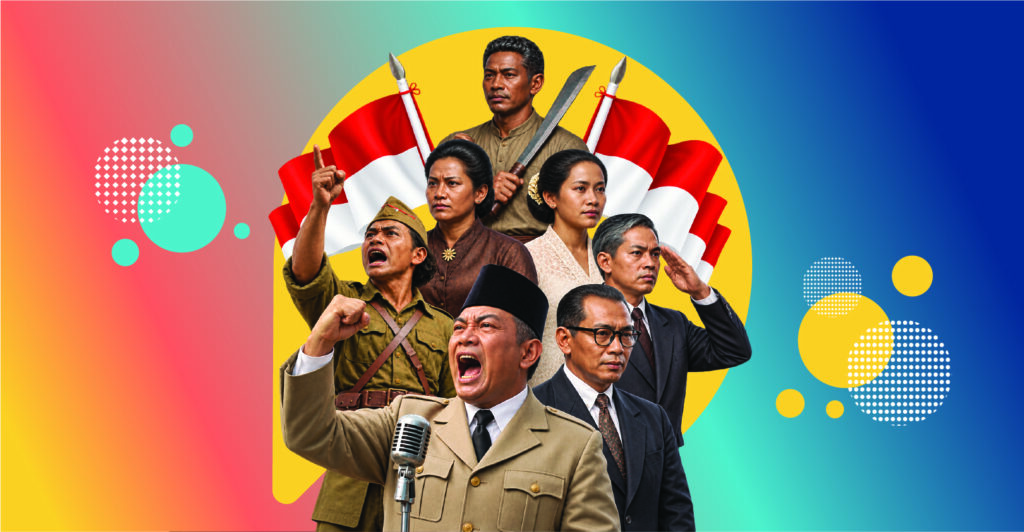
Heroes’ Day in Indonesia, known locally as Hari Pahlawan, is observed every 10 November to honour the Indonesians who fought and died in the 1945 Battle of Surabaya, and by extension everyone who sacrificed for the country’s independence. In 2026 Indonesia marks the 81st anniversary of that battle.
What Is Heroes' Day?
Heroes’ Day is a national day of remembrance observed on 10 November. Ceremonies are held at schools, government offices and heroes’ cemeteries across the country, with the largest events in Surabaya, the city where the 1945 battle took place. It is a day of commemoration rather than a public holiday, so offices and schools generally stay open.
Background: Indonesia After Independence
Sukarno and Mohammad Hatta proclaimed Indonesian independence on 17 August 1945, just days after Japan’s surrender in the Pacific War. The young republic had barely formed a government and an army when Allied forces began arriving to disarm Japanese troops and free prisoners of war. Dutch officials also returned with those forces, hoping to restore colonial rule. Many Indonesians, especially in Java’s cities, saw this as a threat to the independence they had just declared.
Surabaya, Indonesia’s second-largest city and a major port, became one of the sharpest flashpoints. Armed youth groups, former Japanese-trained auxiliaries and local fighters had seized large quantities of Japanese weapons, and the city was tense.
Timeline to 10 November 1945
- 19 September 1945, the Hotel Yamato incident. Dutch-linked groups raised the Dutch flag over the Yamato Hotel (formerly the Oranje Hotel). Angered Surabaya residents climbed the building and tore the blue stripe off the flag, leaving the red and white of the Indonesian flag. The episode became a symbol of the city’s defiance.
- 22 October 1945, the Resolusi Jihad. Senior Muslim scholar KH Hasyim Asy’ari and the Nahdlatul Ulama leadership issued a call declaring that defending the homeland was a religious duty. It energised fighters, especially in East Java.
- 25 October 1945, British arrival. British-Indian forces under Brigadier General A.W.S. Mallaby landed in Surabaya with a mandate to disarm the Japanese and evacuate prisoners.
- 27–30 October 1945, fighting and Mallaby’s death. Clashes broke out, a ceasefire was brokered, and on 30 October Mallaby was killed in disputed circumstances. The British took this as a grave escalation.
- 9 November 1945, the ultimatum. The British commander, Major General E.C. Mansergh, demanded that Indonesian fighters surrender their weapons by 6 a.m. the next day. Indonesian leaders refused.
- 10 November 1945, the battle begins. British naval, air and land forces attacked Surabaya. The heaviest fighting lasted roughly three weeks, and the city’s defenders held out far longer than the British expected.
Key Figures
- Bung Tomo (Sutomo): a young radio broadcaster whose fiery speeches on the rebel radio rallied the city’s fighters. He was formally named a National Hero in 2008.
- KH Hasyim Asy’ari: founder of Nahdlatul Ulama and author of the Resolusi Jihad.
- Governor Soerjo (R.M. Soerjo): East Java’s first governor, who helped steer the republic’s local administration through the crisis.
- The people of Surabaya: students, workers, militia members and ordinary residents, remembered collectively as the arek-arek Suroboyo (the youth of Surabaya).
Casualty figures remain disputed. Estimates vary widely between Indonesian and British sources, so any single number should be treated with caution.
Why the Battle Matters
Surabaya did not decide the Indonesian National Revolution, which continued until the Netherlands formally recognised Indonesian sovereignty in December 1949. But the battle showed that the new republic would resist, and it became a rallying point for national identity. Even though the city fell to British forces, the determination of its defenders became a defining story of the revolution.
How 10 November Became Heroes' Day
The date was formally fixed as Hari Pahlawan by Presidential Decree No. 316 of 1959, which also listed other national commemoration days. Since then it has been observed annually, with a remembrance ceremony (upacara), wreath-laying at heroes’ cemeteries, and educational events at schools.
Heroes' Day Today
- Ceremonies: flag ceremonies and wreath-laying, led by the president or local officials, with the biggest events in Surabaya.
- Tugu Pahlawan: the Heroes’ Monument in Surabaya, a tall landmark built to honour the battle.
- Museum Sepuluh Nopember: an underground museum beside the monument with dioramas and artefacts from the battle.
- National Heroes: the government continues to confer the title of National Hero (Pahlawan Nasional) on individuals who made outstanding contributions to the nation.
Remembering Today
Heroes’ Day invites reflection on what independence cost and what it still asks of each generation. If you are in Surabaya this November, visit the Heroes’ Monument and the Sepuluh Nopember Museum. If you are teaching or learning from afar, share this short history with your class or community, and read our guide to Youth Pledge Day (28 October) to see how Indonesia’s story of unity began in 1928.
CURIOUS HOW PANEL STATION WORKS?
Panel Station is where people discover trends, share opinions on everyday life, and earn rewards.
Frequently Asked Questions
1. Why is 10 November celebrated as Heroes' Day in Indonesia?
Because it marks the start of the 1945 Battle of Surabaya, when Indonesian fighters resisted British-led forces after refusing to surrender their weapons.
2. Who were the key figures in the Battle of Surabaya?
Bung Tomo, KH Hasyim Asy’ari and Governor Soerjo are among the best known, alongside thousands of ordinary fighters.
3. Is Heroes' Day a public holiday in Indonesia?
No. It is a national day of remembrance, but it is not a public holiday.
4. What was the Hotel Yamato incident?
On 19 September 1945, Surabaya residents tore the blue stripe from a Dutch flag flying over the Yamato Hotel, turning it into the red-and-white Indonesian flag.
5. Which anniversary is Heroes' Day in 2026?
The 81st, counting from 1945.