
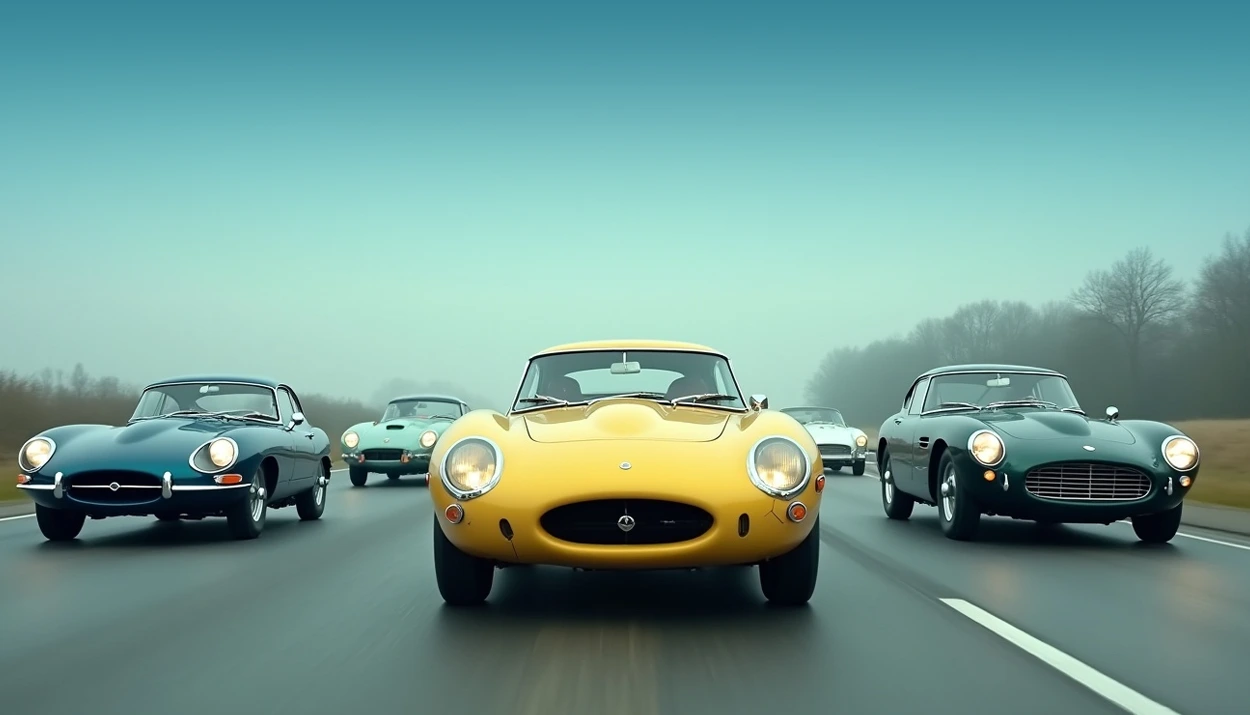

The charm of classic cars that never go out of style lies in their ability to transcend time. While modern vehicles are filled with advanced tech and sleek designs, certain classics continue to capture attention decades after their debut. These cars represent eras, cultures, and innovations that shaped the automotive world. The global classic car market has been steadily growing, with collectors and enthusiasts willing to invest billions every year. And not just for the nostalgia but also for the sheer artistry and performance these vehicles deliver.
Why Classic Cars Still Matter
Classic cars offer something today’s vehicles often don’t: CHARACTER. From the curves of a 1960s Jaguar E-Type to the muscle of a 1970s Ford Mustang, these vehicles carry a personality. They remind us of simpler times when cars weren’t just built for efficiency but also to stir emotion.
According to research, classic cars have outperformed many traditional investments like art and jewellery in recent years, showing annual growth rates of around 8–10%. Beyond financial value, they provide a cultural bridge, connecting generations of drivers and enthusiasts.

Top 15 Timeless Classic Cars of the Automotive World
- Jaguar E-Type
Often hailed as the most beautiful car ever made, the Jaguar E-Type turned heads when it launched in the 1960s. Enzo Ferrari himself reportedly called it “the most beautiful car in the world.” Its sleek design, powerful engine, and racing heritage make it a staple in the conversation about classic cars that never go out of style.
- Ford Mustang
The Ford Mustang is synonymous with freedom and American muscle. Since its debut in 1964, it has become a cultural icon, appearing in countless movies and TV shows. Even today, modern Mustangs echo design cues from their classic predecessors.
- Volkswagen Beetle
Love it or hate it, the Volkswagen Beetle is unforgettable. Designed to be simple, affordable, and accessible, the Beetle became the world’s best-selling car of a single design. Its quirky style and reliability helped it stay relevant across decades.


- Porsche 911
Introduced in 1964, the Porsche 911 has maintained a remarkably consistent design. It combines elegance with precision engineering, making it one of the few models where old and new versions coexist with equal respect among enthusiasts.
- Mercedes-Benz 300SL Gullwing
With its iconic upward-opening doors, the Mercedes-Benz 300SL Gullwing is a collector’s dream. Launched in the 1950s, it was the fastest production car of its time and still looks futuristic today.
- Chevrolet Corvette (C1 – 1953)
The first-generation Chevrolet Corvette marked America’s entry into the sports car scene. With its fiberglass body, sleek lines, and racing pedigree, the C1 became a symbol of style and innovation. It’s one of those classics that defined mid-century American cool.
- Aston Martin DB5
Forever tied to the image of James Bond, the Aston Martin DB5 is one of the most iconic cars in cinema and automotive history. Launched in the 1960s, its combination of elegance, performance, and pop culture legacy ensures it remains a collector’s dream.
- Ferrari 250 GTO
The Ferrari 250 GTO is often called the “holy grail” of classic cars. Produced in extremely limited numbers in the early 1960s, it combines racing dominance with breathtaking design. In fact, it holds records as one of the most expensive cars ever sold at auction.
- Mini Cooper (Classic)
Introduced in 1959, the Mini Cooper redefined small car design with its compact shape and fun driving dynamics. It wasn’t just practical but also a motorsport star, famously winning the Monte Carlo Rally multiple times in the 1960s.
- Toyota 2000GT
Japan’s entry into the classic hall of fame, the Toyota 2000GT from the late 1960s showcased the nation’s engineering excellence. With its sleek body and rarity (only about 350 units produced), it’s now one of the most collectible Asian classics.
- Dodge Charger (1969)
The Dodge Charger became a symbol of American muscle cars, with its aggressive styling and roaring V8 engines. Immortalized in shows like The Dukes of Hazzard and films like Fast & Furious, it’s a car that oozes personality and raw power.
- Citroën DS
Launched in 1955, the Citroën DS stunned the world with its futuristic design and advanced technology, including hydropneumatics suspension. It wasn’t just a car — it was a glimpse into the future, and remains one of the most innovative classics ever built.


- Alfa Romeo Spider (Duetto)
The Alfa Romeo Spider, particularly the “Duetto” model launched in 1966, became famous after its role in The Graduate. With its Italian styling and spirited performance, it represents the joy of open-top motoring and Mediterranean flair.
- Lamborghini Miura
Launched in 1966, the Lamborghini Miura is often considered the first true supercar. With its mid-engine layout and jaw-dropping looks, it redefined performance and design for decades to come. Today, it’s a prized collectible among enthusiasts.
- Rolls-Royce Silver Cloud
Produced from 1955 to 1966, the Rolls-Royce Silver Cloud is the epitome of luxury motoring. Known for its stately design, whisper-quiet ride, and timeless elegance, it continues to symbolize class and prestige in the classic car world.
Top 15 Timeless Classic Cars Comparison Table
|
Car |
Year (Launch) |
Country |
Key Highlight |
|
Jaguar E-Type |
1961 |
UK |
Hailed as “the most beautiful car in the world” with racing heritage. |
|
Ford Mustang |
1964 |
USA |
Cultural icon of American muscle, seen in countless movies. |
|
Volkswagen Beetle |
1938 (popular post-1945) |
Germany |
Best-selling car design ever; quirky, affordable, and reliable. |
|
Porsche 911 |
1964 |
Germany |
Timeless design, precision engineering, respected across generations. |
|
Mercedes-Benz 300SL Gullwing |
1954 |
Germany |
Iconic upward-opening doors; fastest production car of its time. |
|
Chevrolet Corvette (C1) |
1953 |
USA |
America’s first sports car with sleek fiberglass body. |
|
Aston Martin DB5 |
1963 |
UK |
James Bond’s signature car; elegance + performance. |
|
Ferrari 250 GTO |
1962 |
Italy |
Limited production “holy grail”; record-breaking auction prices. |
|
Mini Cooper (Classic) |
1959 |
UK |
Compact yet sporty; Monte Carlo Rally champion. |
|
Toyota 2000GT |
1967 |
Japan |
Rare Japanese masterpiece; only ~350 units produced. |
|
Dodge Charger |
1969 |
USA |
Aggressive styling and raw power; Hollywood muscle car icon. |
|
Citroën DS |
1955 |
France |
Futuristic design with advanced suspension technology. |
|
Alfa Romeo Spider (Duetto) |
1966 |
Italy |
Stylish roadster made famous in The Graduate. |
|
Lamborghini Miura |
1966 |
Italy |
First true supercar; revolutionary mid-engine design. |
|
Rolls-Royce Silver Cloud |
1955 |
UK |
Symbol of luxury and timeless elegance. |
From Muscle to Supercars: A Classic Ride Showcase
- Classic Muscle Cars (USA)
|
Car |
Years |
Key Specs & Fun Facts |
|
Ford Mustang (196) |
1964 – early models |
The car that started the pony car craze. Instantly iconic for its mix of style and muscle. |
|
Chevrolet Camaro (1967 – first-gen) |
1967 |
Chevy’s answer to the Mustang; loved for speed and design balance. |
|
Dodge Charger |
1968–1970 |
Famous wide stance, fastback roofline, movie star appearances (Bullitt, Fast & Furious). |
|
Plymouth Barracuda (‘Cuda) |
1970–1974 |
Aggressive styling, collectible HEMI engines. |
|
Pontiac GTO |
1964–1974 |
“Grandfather of Muscle Cars,” blending power and style. |
|
Chevrolet Chevelle SS |
1970 |
Legendary Super Sport trim, a pinnacle of classic muscle. |
|
Dodge Challenger |
1970–1974 |
Mopar favorite with big-block engines and sporty styling. |
|
Buick GSX |
1970 |
Rare, bold graphics, Stage 1 455 V8 powerhouse. |
|
AMC Javelin AMX |
1971–1974 |
Underrated, stylish, and plenty of horsepower. |
|
Shelby GT500 |
1967–1970 |
High-performance Mustang variant, iconic heritage. |
- Tuner Cars (Mostly JDM & American)
|
Car |
Years |
Key Specs & Fun Facts |
|
Toyota Supra MK4 (A80) |
1993–2002 |
Turbo inline-6, iconic 2JZ engine swaps. |
|
Nissan Skyline GT-R R32/R33/R34 |
1989–2002 |
RB26DETT engine, legendary AWD platform. |
|
Mazda RX-7 FD3S |
1992–2002 |
Lightweight rotary engine, drifting favorite. |
|
Honda Civic EG/EK |
1988–2000 |
Simple, lightweight, endlessly customizable. |
|
Mitsubishi Lancer Evolution I–VI |
1992–2001 |
AWD turbo thrill machine. |
|
Toyota AE86 Corolla |
1983–1987 |
Rear-wheel drive legend for drifting. |
|
Nissan 240SX / Silvia S13–S15 |
1989–2002 |
Drift and track favorite, mod-friendly. |
|
Acura Integra GS-R / Type R |
1994–2001 |
High-revving K-series engines, tuners’ favorite. |
|
Subaru Impreza WRX STI |
1994–2000 |
Rally-bred AWD performance car. |
|
Mazda MX-5 Miata NA/NB |
1989–2005 |
Lightweight, rear-wheel drive, handling-focused. |
European Classics
|
Car |
Years |
Key Specs & Fun Facts |
|
Volkswagen Golf GTI MK2/MK3 |
1984–1999 |
Small, nimble, turbo or NA tuning. |
|
BMW E30 3-Series |
1982–1994 |
Inline-6 swaps, suspension tuning legend. |
|
Audi Quattro |
1980–1991 |
AWD rally icon, tunable turbo engines. |
|
Porsche 944 Turbo |
1985–1991 |
Lightweight, balanced, turbocharged fun. |
- Classic Supercars
|
Car |
Years |
Key Specs & Fun Facts |
|
Ferrari F40 |
1987–1992 |
Twin-turbo V8, raw, lightweight, track-focused legend. |
|
Lamborghini Countach |
1974–1990 |
Wedge-shaped icon, V12, scissor doors. |
|
Porsche 959 |
1986–1989 |
Twin-turbo flat-six, AWD, one of the fastest cars of its era. |
|
Ferrari 512 BB (Berlinetta Boxer) |
1976–1984 |
Mid-engine V12, stunning handling. |
|
Lamborghini Miura |
1966–1973 |
Often first modern supercar, mid-engine V12. |
|
McLaren F1 |
1992–1998 |
Naturally aspirated V12, record-breaking top speed, carbon fiber chassis. |
|
Aston Martin V8 Vantage |
1977–1989 |
Twin-spark V8, classic British GT styling. |
|
Jaguar XJ220 |
1992–1994 |
Twin-turbo V6, sleek styling, engineering marvel. |
|
Bugatti EB110 |
1991–1995 |
Quad-turbo V12, AWD, supercar of the ’90s. |
|
Ferrari Testarossa |
1984–1996 |
Iconic side strakes, mid-engine V12, 1980s legend. |
Characteristics That Make Classic Cars Timeless
Why do some models stand the test of time while others fade into obscurity? A few defining factors include:
- Distinctive design – Lines, curves, or shapes that make a car instantly recognizable.
- Cultural relevance – Cars tied to moments in history, film, or pop culture.
- Engineering innovation – Vehicles that introduced ground breaking technology.
- Driving experience – Raw, unfiltered performance that resonates with enthusiasts.
- Community and heritage – Enthusiast groups and clubs that keep the legacy alive.
The Global Appeal of Classic Cars
Classic cars are not just loved in their home markets. They’ve become global symbols:
- In Europe, cars like the Mini Cooper and Citroën DS continue to attract admiration.
- In the US, the muscle car era with Mustangs and Camaros is deeply nostalgic.
- In Asia, the Toyota 2000GT is a rare and valuable collectible.
Global auctions like RM Sotheby’s and Bonhams see millions spent annually on these vehicles, proving their universal appeal.
Owning a Classic Car – Things to Consider
Pros
- Emotional value – A strong sense of pride and nostalgia.
- Investment potential – Many classics appreciate in value over time.
- Community – Clubs, rallies, and exhibitions create social connections.
Cons
- Maintenance – Spare parts can be expensive and hard to find.
- Practicality – Not built for modern traffic conditions.
- Storage needs – Require careful upkeep and safe storage to maintain value.
Tips for Buying Classic Cars
If you’re considering investing in classic cars that never go out of style, here’s a practical checklist:
- Do thorough research on the model and its history.
- Check authenticity – verify VIN numbers, documents, and originality.
- Inspect the condition – body, engine, and interiors matter.
- Understand costs – factor in restoration, storage, and insurance.
- Buy from trusted dealers or auctions to avoid scams.
Modern Influence of Classic Cars
Interestingly, many modern cars borrow design elements from classics. For example:
- The Mini Cooper still retains its classic silhouette.
- The Dodge Challenger continues the muscle car tradition.
- The Fiat 500 revival keeps the charm of the original.
These design revivals prove the enduring influence of classic vehicles on the modern auto industry.
The Cultural Connection
Classic cars are storytellers. They’ve appeared in movies, music, and art like the Aston Martin DB5 in James Bond films or the DeLorean from Back to the Future. These cars are cultural icons as much as they are engineering marvels.
FAQs About Classic Cars That Never Go Out of Style
- Are classic cars a good investment?
Yes, many classic cars appreciate in value over time, especially rare and well-preserved models. However, it’s wise to view them as both passion and investment, since maintenance costs can be high.
- Which classic cars are easiest to maintain?
Models like the Volkswagen Beetle and older Ford Mustangs are generally easier to maintain due to widely available spare parts and strong enthusiast communities.
- Do classic cars require special insurance?
Yes, most insurers offer specialized classic car policies that account for limited usage and agreed value rather than standard depreciation models.
- Can classic cars be used for daily driving?
While it’s possible, it’s not recommended. Classics are better suited for weekend drives, shows, or rallies. Daily use may accelerate wear and reduce long-term value.
- What defines a car as a “classic”?
Definitions vary, but most automotive organizations consider cars older than 20–25 years, with historical or cultural significance, as classics.