

Football brings people together in ways few other sports can. Beyond goals, trophies and rivalries, it creates emotional connections, shapes identities and turns sporting moments into lifelong memories. But why does a game inspire such extraordinary passion?
A last-minute goal can bring thousands of strangers together in celebration. A missed penalty can leave an entire nation disappointed. Even years later, supporters remember where they were when their favourite team achieved something extraordinary.
Football’s influence extends far beyond the ninety minutes played on the pitch. It becomes part of family traditions, friendships and personal identity.
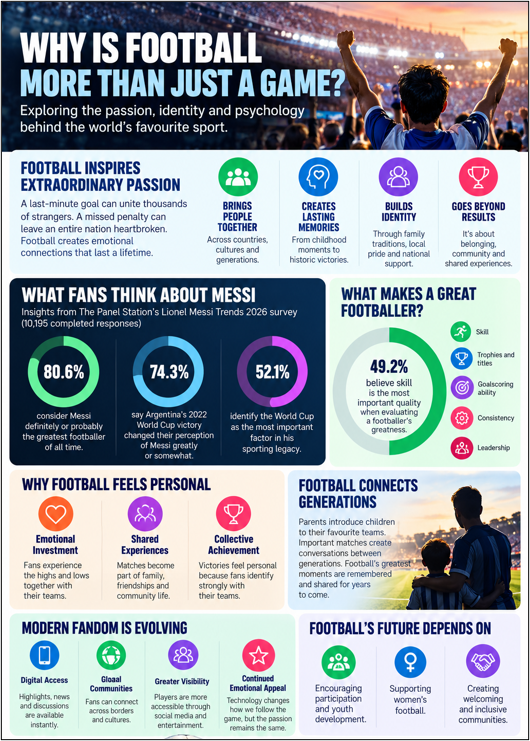
The Panel Station’s Lionel Messi Trends 2026 survey, based on 310,195 completed responses, offers an interesting perspective on this emotional connection. With 80.6% of respondents considering Messi definitely or probably the greatest footballer of all time, the research highlights how deeply audiences admire exceptional sporting talent.
Yet football’s appeal goes beyond individual players.
Why Does Football Create Such Strong Emotional Connections?
Supporting a football team means investing emotionally in an outcome that remains uncertain until the final whistle.
Fans celebrate victories, experience disappointment and develop loyalties that often continue throughout their lives. These feelings become stronger when football is associated with childhood memories, family traditions or shared experiences.
A supporter may remember watching matches with a parent or celebrating a championship with friends. Over time, these memories give football a personal significance that results alone cannot explain.
The game becomes meaningful because it connects sporting moments with people’s lives.
Why Do Sporting Victories Feel Like Personal Achievements?
Football supporters often identify strongly with their favourite teams and players. When those teams succeed, fans experience a sense of collective achievement.
Argentina’s 2022 FIFA World Cup victory demonstrated this connection.
In The Panel Station’s survey, 74.3% of respondents said the victory changed their perception of Messi greatly or somewhat. Furthermore, 52.1% identified the World Cup as the most important factor in his sporting legacy.
These findings reveal how defining victories can reshape public perceptions.
Messi’s triumph represented more than winning a trophy. For supporters who had followed his international disappointments, it brought a long sporting journey to a satisfying conclusion.
What Makes Football Legends So Influential?
Great footballers are remembered for their achievements, but supporters do not always define greatness in the same way.
Some admire goalscoring records and trophies, while others value creativity, consistency and technical excellence.
The Panel Station’s research found that 49.2% of respondents considered skill the most important quality when evaluating football’s greatest player.
This suggests that sporting admiration involves more than winning.
Exceptional players influence how audiences experience football. Their performances create memories, inspire younger generations and become reference points for future sporting comparisons.
What Makes a Footballer Truly Great?
Explore The Panel Station’s Lionel Messi Trends 2026 research and discover how fans define footballing excellence.
Can Football Continue Bringing Generations Together?
Football’s greatest strength may be its ability to connect people across countries, cultures and generations.
Parents introduce children to favourite teams, friends develop traditions around important matches, and international tournaments bring communities together.
Technology has expanded these connections. Supporters can now follow players, watch highlights and participate in football conversations regardless of geographical boundaries.
Yet the emotional foundations remain familiar. People want excitement, belonging and experiences they can share.
For clubs, broadcasters and brands, understanding these relationships matters more than simply attracting attention. Lasting engagement develops when supporters feel connected to something meaningful.
Football’s future will depend not only on producing exceptional players but also on preserving the experiences that make people love the sport.
What Does Football Mean to You?
Participate in The Panel Station’s surveys and share the sporting moments, players and traditions that matter most.
Frequently Asked Questions
1. Why is football more than just a game?
Football creates emotional connections, strengthens communities and becomes part of personal and cultural identity.
2. Why do fans become emotionally attached to football teams?
Family traditions, shared memories, sporting loyalty and collective experiences create lasting emotional attachments.
3. What makes a football player legendary?
Exceptional ability, consistency, major achievements and memorable performances contribute to a player’s lasting influence.
4. How does football bring people together?
Football creates shared experiences across generations, nationalities and communities through competition, celebration and sporting traditions.