
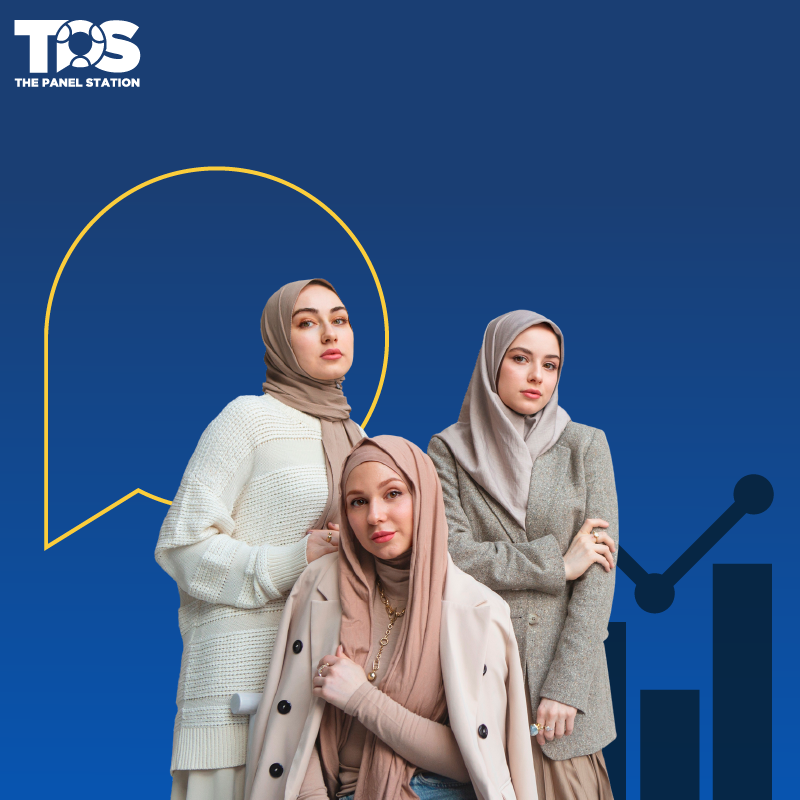
Do Girls Just Wanna Have Leem?
What “modern modesty” reveals about identity, family approval, and how style changes without breaking tradition
Fashion in Saudi Arabia has never been only about clothing.
It has always carried signals: where you come from, what you respect, how you want to be seen, and how much room you feel you have to express yourself.
So when a brand builds its entire promise around “modern meets modest,” the real question is not whether the designs look good. The real question is whether people feel safe wearing them, especially in the places that matter most: family spaces, community spaces, and moments loaded with meaning.
We analysed opinions from 112,322 Saudi shoppers exploring awareness, cultural fit, family comfort, and whether fusion fashion helps people express who they are.
Now, it’s your turn!
1. The closet is quietly changing, even when people don’t call it change
What people say they buy most often already hints at a pivot: 52% choose modest everyday wear, 29% lean toward casual modern clothing, and only 19% say they still prefer traditional attire most.
That does not mean tradition is disappearing. It means “traditional” is no longer the only default. Modesty is staying, but the shape of modesty is expanding.
No Data Found
No Data Found
Why this matters:
Culture rarely shifts by announcement. It shifts by daily choices that start feeling normal.
Here’s a question for you!
2. Awareness is strong, but it’s not universal, and that matters for trust
A solid 68% say they are aware of the brand, while 21% have heard of it but never explored it, and 11% had no idea about it.
That middle group, the 21%, is where perception is still being formed. They are not rejecting. They are observing. In fashion, that “watching phase” is often less about the brand and more about social proof: who is wearing it, where, and how it’s being received.
No Data Found
No Data Found
Why this matters:
In modest fashion, curiosity often arrives before confidence.
Quick question!
3. Cultural alignment is mostly there, but “somewhat” is the real story
When asked if the concept aligns with cultural norms, 56% say yes and 28% say somewhat, with 16% saying no.
That 28% is the most revealing group. “Somewhat” is not resistance. It is negotiation. It usually means: I like it, but I’m thinking about where I can wear it, who will comment, and whether it will feel right in certain rooms.
No Data Found
No Data Found
Why this matters:
In Saudi fashion, acceptance isn’t only personal. It’s relational.
What’s your take?
4. Family gatherings are the true test, not the mall
When asked if they would feel comfortable wearing the brand to family gatherings, only 46% say yes, while 33% say somewhat and 21% say no.
That split shows something important. Public spaces might accept modern modesty quickly, but family spaces move differently. Family gatherings are where tradition feels most alive, and where judgement can feel loud even when nobody says anything.
No Data Found
There’s also a generational signal: 58% of those aged 16–24 feel confident wearing it around family, compared to 35% among those aged 35–49. The younger group isn’t necessarily “less traditional.” They are simply more comfortable expanding the boundaries of what still counts as respectful.
Why this matters:
The future of style often enters through younger confidence, then becomes normal through repeated exposure.
What do you think?
5. Fusion fashion is becoming self-expression, but within guardrails
Among young respondents, 71% say fusion fashion helps them express individuality, while 19% say somewhat and 10% say no.
That is not a rejection of heritage. It is a different relationship with it. The desire is not to look “Western,” but to look personal while still staying within what feels culturally grounded.
Here’s a gentle challenge:
If self-expression matters, but family approval matters too, the real skill becomes learning how to express yourself without creating distance.
No Data Found
No Data Found
Why this matters:
Style becomes a form of identity management, not vanity.
Now, it’s your turn!
6. What people prioritise shows what fusion must earn
When people choose fusion clothing, the priorities are practical before aesthetic. 37% put comfort and fabric quality first, 30% prioritise cultural appropriateness, and 25% focus on price and value. Only 8% place style and modernity at the top.
That single hierarchy explains how modern modest fashion wins long-term. It does not win by being trendy. It wins by feeling good in the climate, looking respectful in the right settings, and being worth the money.
No Data Found
No Data Found
Why this matters:
In this category, design is not enough. The product has to feel livable.
Here’s a question for you!
The most interesting thing here is not whether modern fashion can coexist with tradition.
It already is.
But it coexists through careful choices, not dramatic statements. People want modernity that still feels respectful, and self-expression that does not create social friction. The numbers show openness, but they also show the boundaries where approval still matters most, especially in family settings.
Quick question!
FAQs
1. Do Saudi shoppers accept modern modest fashion?
Mostly yes. 56% say it aligns with cultural norms and 28% say it somewhat aligns, showing openness with caution.
2. How aware are people of the brand?
Awareness is strong: 68% were aware, while 21% had heard of it but not explored it, and 11% were unaware.
3. Would people wear modern modest fashion to family gatherings?
It’s mixed: 46% say yes, 33% say somewhat, and 21% say no, showing family spaces remain a higher standard for “appropriateness.”
4. Is there a generational difference in comfort?
Yes. 58% of ages 16–24 feel comfortable wearing it around family, compared to 35% among ages 35–49.
5. What matters most when buying fusion clothing?
Comfort and fabric quality lead (37%), followed by cultural appropriateness (30%) and price/value (25%). Style ranks much lower (8%).
6. Does fusion fashion support self-expression among younger shoppers?
Yes. 71% say fusion fashion helps them express individuality, with 19% saying somewhat.
About Author : Soneeta
A bookworm at heart, traveler by soul, and a sports enthusiast by choice. When she is not exploring new places, you’ll find her curled up with her pets, binge-watching movies. Writing is her forever sidekick. Soneeta believes that stories are the best souvenirs you can collect. Basically, she is fueled by books, adventures, and a whole lot of pet cuddles.