
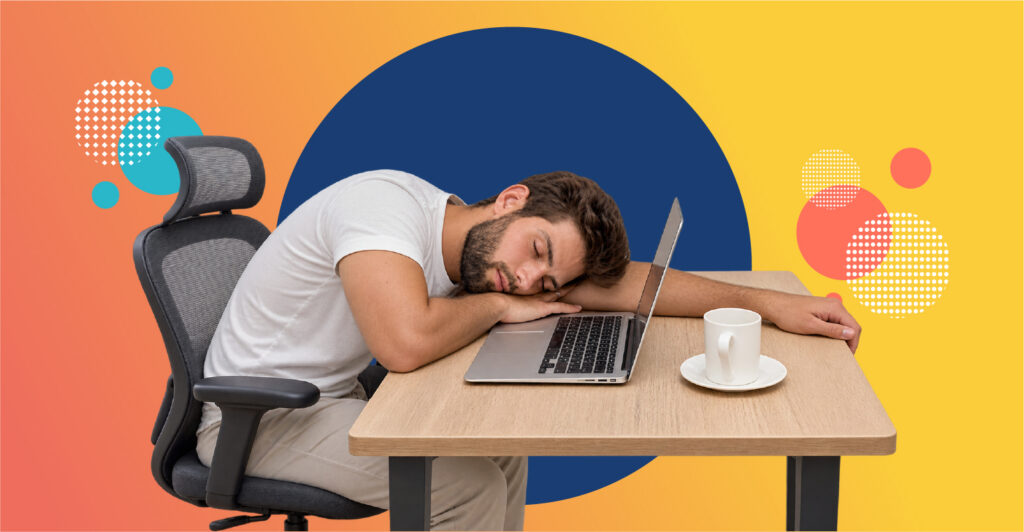
The lights are off, but the day is still running. A work message needs a reply. Tomorrow’s tasks need arranging. A thought you ignored all afternoon suddenly wants your full attention.
Modern sleep patterns are shaped by what happens long before we reach the bedroom. The Panel Station’s Sleep and Productivity survey offers a revealing snapshot: 53.7% report sleeping fewer than seven hours nightly, while 39.1% identify stress or overthinking as their main sleep disruptor.
Does Your Working Day Have an Ending?
Finishing work does not always mean feeling finished. There may be a final email, an unfinished assignment or household responsibilities waiting after paid work ends.
In the survey, 16.6% name work or study schedules as their main sleep disruptor. That points to the importance of looking beyond individual bedtime choices. Someone managing late shifts or study deadlines may have limited control over when rest becomes possible.
What Follows You to Bed?
Share the everyday pressures that shape your nights.
What Keeps Your Mind Online?
A phone makes entertainment, conversation and tomorrow’s concerns available from the same screen. You might open it to relax and encounter something that demands another decision.
28.6% name bedtime screen time as their main sleep disruptor. The survey does not establish which activities are responsible, but it gives us a useful question to consider: what are we actually doing during those final minutes online?
Are We Asking Mornings to Repair Our Nights?
Coffee, stretching and a carefully planned routine can give mornings a familiar rhythm. Yet 59.5% select enough sleep as something that helps them feel refreshed, ahead of coffee or tea at 37.2%.
These are respondents’ reports, rather than tested remedies. They suggest that the conversation about better mornings should include the night before.
How Does Your Morning Begin?
Join The Panel Station and share your routine.
Could Rest Have a Place Earlier in the Day?
Perhaps the starting point is noticing what repeatedly pushes bedtime back. Is it a schedule you cannot change, a task that needs sharing or an evening that never feels complete?
Understanding that pressure gives the conversation about sleep somewhere practical to begin.
Frequently Asked Questions
1. What is the most common sleep duration?
Five to six hours, reported by 41.0%.
2. What leads reported sleep disruption?
Stress or overthinking, at 39.1%.
3. Are screens the only factor?
No. Respondents also identify schedules and other pressures.
4. What leads morning refreshment choices?
Enough sleep, selected by 59.5%.
5. Do these findings prove sleep patterns are changing?
No. They provide a snapshot, without measuring change over time.